Friday

The Difference Between A Good Guy And A Protagonist

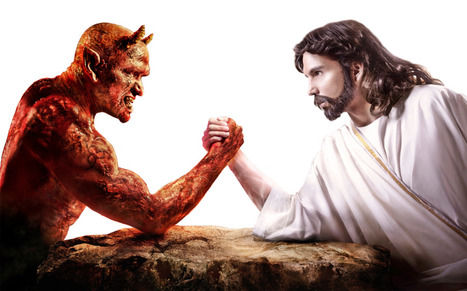
I’ve always thought that the most realistic antagonists are convinced they’re not being bad. They honestly believe that what they’re doing is right. 

How else can you explain the despicable shit my ex-wife pulled during our divorce?

So when it comes to a story where a protagonist confronts an antagonist, it only makes sense that a legitimate argument can be made to root for either character. 

The trick is in the telling. And just the other day I stumbled onto a wonderful example. It’s by J. Matthew Turner and wow, is it a lesson in perspective. 

Monday

Adventures in Script Meetings

Corporate shill.
I was recently hired by an ad agency to write a 22-minute television show –– an animated family story that takes place in Pre-Colonial Hawaii and involves a young prince and his pet chicken. (Imagine 'Rudolph the Red Nose Reindeer' with a corporate agenda.)

Because my kids love stories (and because we were waiting for the pizza we ordered to be ready), I took them through the entire script. 

Walter the Chicken. The one the
character in the story is based on.
They sat, rapt, for the whole 22-minutes. I know this because when I was done, I quizzed them on what happened. I asked them to let me know if anything about the story didn’t make sense. Nope, they replied. Although it could have been clearer that the bad spirits turned into nice spirits at the end. 

Note taken.

Then I asked if they liked it.

“Loved it,” they both said.

But then there was a little hesitation from Dashiell, my seven-year-old.

“You know what, Dad?”

“What?”

“Maybe instead of a raft, it could be a rocket that goes into a black hole and that’s how he gets to the Dark Island.”


And just like that, I’m back in Hollywood, having a story meeting with a studio exec.

Brian Belefant is a director who also works as a writer, but is mostly looking for directing gigs these days and if you happen to need a director you could do a lot worse than hiring him. Try calling (503) 715 2852 or emailing belefant (at) me (dot) com.

Tuesday

What to look for in a line producer (part 3)

I can't see the forest.
Wow. Has it really been a month? I've been so busy with post production on a film project I'm working on that I haven't had time to write up a post. 

Guess I probably ought to start with a recap.

In What To Look For In A Producer (Part 1) I said that the most important thing to look for in a line producer is ethicalness. And then after I hit Publish I realized there’s a better word for that: Integrity. 

Whatever. 

A couple of weeks later I put up What To Look For In A Producer (Part 2), in which I said that the second most important thing to look for in a line producer is a commitment to seeing the project through. Finishitoffness.

There. All caught up.

Now for the third most important thing to look for in a line producer, which is related to both of those, but different enough that it deserves to have its own number. Number 3.

Ready? The third most important thing to look for in a line producer is the ability to see the big picture. 

Let me give you an example.

Not that kind of Dolly.
I was shooting a commercial project that turned out to be a bit more intricate than the producer had initially anticipated. So after the bid was accepted and the job awarded, we discovered that we needed four days to do what he had initially thought we could accomplish in three. As you can imagine, a fourth day makes a pretty significant difference to a budget, what with the additional crew hours and equipment and stage rental. Needless to say, the producer was concerned –– as was I –– about making it work for the money.  

But we’d committed (integrity) and we were determined to see it through (finishitoffness). So we plowed ahead, keeping an extra eye on expenses. 

I’m one of those directors that’s pretty good at scheduling out my days and when I did, I worked it out that our first shot on the first day required a dolly. Which is only important because of what happened. We all showed up on the first day to find... no dolly. 

Not that kind of Dolly, either.
Which means we couldn't get the shot. 

The producer had decided that since money was tight, he’d book the dolly to show up at noon. 

He saved a couple hundred bucks, tops. And ended up having to pay thirty crew members to stand around while the rest of us scrambled to get ready for what turned out to be our first shot, which of course we didn’t actually shoot until almost when we were scheduled to shoot it in the first place. When the dolly finally showed up, we interrupted the flow of what we’d already planned to follow the first shot in order to take advantage of the light that was quickly becoming crap in order to get the dolly shot. 

That was a producer who didn’t see the big picture. And the thing about producing is that there are so many aspects to a production that there’s a lot of big picture to see. The job is seriously like putting together a jigsaw puzzle, only there’s no one right way to do it. You have to take into consideration equipment and crew and cast members and light and locations and preferences and availabilities and all that. A lot of the time, it’s a matter of figuring out the least worst solution to the problem, but in order to do that, a producer needs to keep sight of what is important –– not just to the director, but to everybody. 

There. That's the Dolly I'm talking about.
In the case of this example, the big picture wasn't all that big. The guy wanted to save money, which is one of the things producers are supposed to do. But he ended up wasting a ton more. Plus he put us behind schedule from the very beginning and put the crew into a panic because we had to scramble to move on to what would have been the second shot of the day. Worst of all, he caused incalculable harm to my relationship with the ad agency, who rightfully wondered if I'd ever actually directed a commercial before. 

All that stuff is the big picture. Plus more. And before you haul off and hire a line producer, it’s a good idea to be sure you’re on the same page with regard to just what the big picture is. 

And this, of course, brings up the obvious follow-up question: Brian, just how do I find a producer who sees the big picture? 

No guarantees, but I’ll tell you something I do that helps. I talk about food. 

Seriously.

As someone who has (and still does) work for free, I sincerely believe that a well-fed crew is s happier and more productive crew. So no matter how much we ask people to compromise on their rates, I never want to cut corners on lunch. The difference between a crappy lunch and a good lunch is sometimes less than $5 a person. So it’s really a small concession to make when we’re asking someone to cut their rate by $100 a day. 

This isn’t something I declare when I’m talking to a producer I’ve never worked with before. It’s a discussion I open, to see where they go. 

And no, it’s not the only thing I do, but I find that how a producer feels about feeding a crew is usually a pretty good indicator of the way he or she feels about how all the myriad factors of a production are interrelated. 

That producer? The one who booked the dolly to show up at noon? He thought it would be a good idea to cap off a long day of hard work by having Taco Bell cater the crew’s dinner. This came up before we found out we were going to have to shoot four days for the price of three. I didn’t realize at the time, but that was a sign. 

Brian Belefant is a director who's so busy finishing up the project he's working on that he doesn't have time to be out looking for the next one. Think you might be able to use him? If so, give him a call at (503) 715 2852 or email him at belefant at me dot com.
Thursday

What to look for in a line producer (part 2)

You know what sucks about working as a director? You really don’t get to see how other people do what you do. 

I figured out a way around that. What I did was sign up with an extra casting service. I’d get booked as an extra on other people's sets and get to see how different directors work. 

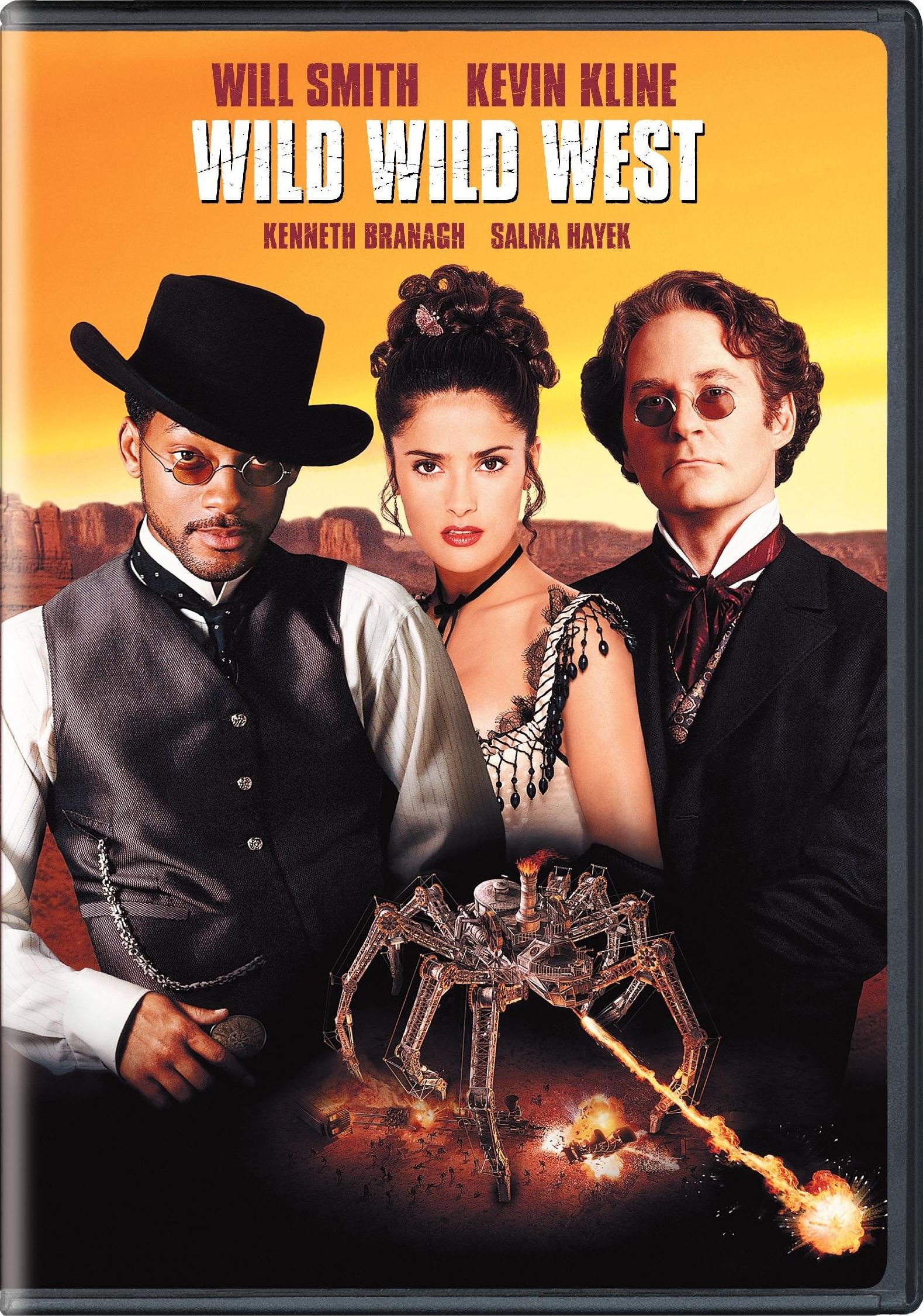
Remember that movie ‘The Wild, Wild West’? I was in that.

Don’t bother looking for my name in the credits. They hired hundreds of us, put us in genuine wool Confederate army uniforms, had makeup people apply facial hair, and then told us to sit in a non-air-conditioned soundstage all day in sweltering Burbank, waiting to be called to the set. 

Fun.

I had been booked for four days. When I got home at the end of the third day I got a phone call. A directing job I'd been hoping to get had come through. 

Of course I came in for the fourth day –– I’d put off starting the directing job because I’d committed to the extra work –– but since the scenes I was supposed to be in hadn’t been finished, the Assistant Director made an announcement to the bunch of us that they’d be needing us to come back for a few more days. 

I took the AD aside and told him that I was sorry, but that I couldn’t make it back. And this guy? He tried everything. He appealed to my greed. (“I’ll see if I can swing you more money.”) He appealed to my sense of duty. (“You committed to this project. You can’t just leave us in the lurch like this.”) He even tried to threaten me. (“With an attitude like that, you’re not going to go very far in this business.”)

Finally, out of ammo, he asked. “What could you possibly be doing that’s more important than helping make this film come together?” 

I didn’t want to do it, but I had to tell him. “I booked a job directing a commercial for American Express.”

“Oh.” 

There are two points to this story and they both aim square at the second most important thing you need to look for in a producer: 

The second most important thing to look for in a line producer is someone who’s committed to seeing your project through.

Point one was that I was not that. Not to Barry Sonnenfeld, anyway, or the rest of the people on ‘The Wild, Wild West’ and maybe that’s why the movie turned out to be such a turd. Point two was that the AD was. He did his very best to get me to come back, but no matter how hard he tried I gave him something he simply couldn’t trump. 

Granted, I wasn’t the producer and neither was he. But here’s the thing. There will always be reasons. People get sick. People’s kids get sick. Relatives die. Those and many more are legitimate reasons to not come into work and if you don’t understand those you shouldn’t be in a position of authority.

It’s the illegitimate reasons that can never ever ever get in the way. Like the producer who disappeared on me because the surf was really good. Or the one who went incommunicado for hours at a time as soon as the bars opened. 

When you hire a producer, make sure you hire one who wants not only to be a producer, but wants to be your producer. As uncool as it is, people will ditch one job for a better one and let’s be honest, your masterpiece might not be the best job a producer is in contention for.

Remember the first most important thing to look for in a producer? Ethics? This is a another reason that’s Thing Number One. An ethical producer will finish out his or her commitment to you and if Spielberg calls, he or she will ask him to wait until this project is finished. 

I don’t know Steven Spielberg, but I’d be willing to bet you he’d respect that. After all, he’s not looking for someone who’s going to disappear in the middle of his production, either. 

As for Barry Sonnenfeld, if you’re reading this? Dude, I’m sorry.

Brian Belefant is a copywriter turned director still finishing up post production on a corporate video that you'll never get to see because of all the non-disclosure agreements and stuff. But hey, if you're looking to put together your next project, maybe he'll be done by the time you pull the trigger. Call (503) 715 2852 or email belefant@me.com.

What to look for in a line producer (part 1)

I recently heard from an aspiring filmmaker. He managed to put the money together for a short he wants to shoot (hooray!) and he asked me to help him find a line producer to make it. 

Seems simple enough. But you know me. Rather than simply giving him a couple of names, I sat down and thought about what I look for in a producer. Then I wrote all those things down in a list and put them in order of priority. 

And then, rather than actually getting back to the aspiring filmmaker, I decided to put it all together and post each characteristic, one blog post at a time. 

Kidding. 

Here's what I told him: 
  1. The most important quality to look for in a line producer: Someone who’s ethical.
The single most important quality to look for in a line producer is someone who not only knows the difference between right and wrong, but who always, always does what’s right. 

Right for the production, for the crew, for the actors, for the community, and for you.

I’m going to get into budgeting basics in another blog post, but for now take me at my word when I say that budgets are fuzzy things in that there are thousands of places to bury a body. What’s the rate for a gaffer? Well, there’s a range, but on each and every production it’s up to the producer to negotiate the rate with the gaffer. 

You don’t want a gaffer who resents being paid less than what he or she feels is fair, but at the same time, you don’t want to just throw money at the gaffer, either. 

An ethical producer takes all the relevant factors into consideration: The size of your budget, the number of days you’ll be shooting, the circumstances  (it’s a lot easier to ask for flexibility when you’re shooting on a tropical beach than when you’re shooting in a garbage dump), the team being put together, the kind of piece you’re working on, the number of favors you’ve already asked from the gaffer, and perhaps most important, your reputation. Yours. 

I’ve had crews drop everything for a chance to get paid half their normal rate when they heard it was a chance to work with me and oh by the way, we were going to be shooting at night. In winter. Outside. Why? Because from the day I started directing almost 20 years ago I’ve made it a point not to be an asshole. I take care of my crews, I treat my actors with respect, and I bust my own butt. 

(To be fair, I've had crews drop everything for a chance to get paid half their normal rate when they heard it was a spot for a Swiss bank and there'd be a topless girl in it, but that's another story.)

If you’re a newcomer, you don’t have a reputation yet and frankly, that can work against you. First timers are often indecisive, which ends up wasting a lot of time. Or they can try to overcompensate for their lack of experience by being too decisive, which ends up pissing off a lot of people who really are just trying to make things go better.

If you’re a newcomer, go ahead and try to assuage your producer. If he or she is any good, it won’t make a difference because, well, you’re a newcomer and there’s no value in making promises to a crew about what you’re going to be like to work with that he or she can’t keep. 

But let’s go back to that gaffer. The one whose rate was being negotiated. I’ve heard of producers negotiating one rate with the gaffer, but then putting another number into the budget. One that's a touch higher. What happens to the difference? Well, producers need to drive nice cars, right?

At this point you've been reading along, hoping I would get around to answering that question: “But, Brian, where can I actually find an ethical producer?” Here comes. 

Let's go back to what I said before, about how you want to find someone who always does what's right for the production, for the crew, for the actors, for the community, and for you. The thing about ethical people is that they'll have a reputation. And people with reputations are pretty easy to find. 

All you have to do is do what that aspiring filmmaker did: Ask. Not me, obviously, because I'll probably just turn it into a blog post instead of giving you an answer. 

Okay, ask me. But also ask anybody who might have crossed paths with a line producer they'd recommend. Ask actors, directors, crew members, people who let some aspiring filmmaker shoot in their barn. Ask specifically for people who are ethical.

See? Pretty easy. 

But there's more. And I'll get to each and every one of those in future blog posts, which if you want to make sure you don't miss, why don't you sign up for my email list? The only spam you'll get is from me, and it's only spam if you're not interested in what I have to say. Which you are. 

Brian Belefant is a copywriter turned director currently finishing up post production on a corporate video that you'll never get to see because of all the non-disclosure agreements and stuff. But hey, if you're looking to put together your next project, please call (503) 715 2852 or email belefant@me.com. 

Tuesday

How to watch your own film

If you think this is Nice, you're close.
It's Cannes.
I was super lucky. I learned this lesson at Cannes, where a public service announcement I’d directed was chosen to screen. Major venue. Sophisticated audience. Sold out theatre. (Did you notice I spelled it with the R before the E? Yeah. All French and everything.)

So anyway, sold out theatre, which meant that by the time I got there I ended up having to stand and I guess the French fire marshall isn’t as particular as the ones we have here because even after all the seats were taken, people kept piling in. And all of them were going to see the tiny thing we managed to pull together for less than $6,000 –– and that included what we spent to fix the scratch on the negative, which by the way wasn’t David Claessen’s fault. He did an amazing job as the cinematographer on this and I have yet to thank him appropriately.

Where was I?

David Claessen –– extraordinary cinematographer
By the time the lights went down, the aisles were full and I’d been shoved all the way to the front of the theatre, almost underneath the screen, which meant I didn’t get a very good view of anything that was being projected. But I got an incredible view of the audience. 

I got to see people engaged, bored, interested, fidgeting…

When my little gem came on, I wanted to see it. I mean, I WAS SCREENING IN CANNES! 

But I couldn’t, really. And besides, it’s not like I hadn’t seen it before. So I watched the people watching it. 

The whole spot happens in one take –– that’s the way I designed it –– and there’s an instant where I want you the viewer to realize what’s going on and just how horrific it is. It’s one thing for a director to intend that; quite another for a director to make it happen. And I made it happen. The entire theatre gasped at exactly the same moment.

(If this video doesn't play,
try this link: https://vimeo.com/75154837)

“Damn,” I thought to myself. “I am very talented."

And this is why I was lucky. It happened early in my career. 

So early in my career that I figured, hey, I’m going to watch people watch my stuff every chance I get because that way I’ll get to see for real just how talented I am. 

What I came to find out pretty quickly was that while everything worked exactly the way I planned for it to in this one piece, other times stuff didn’t go quite the way I thought it would. A joke I thought would get a huge laugh would only get an appreciative nod. Or a narrowing of the eyes. One time I happened to be in a bar when a commercial I’d just finished working on, one that I was super proud of, came on the TV. Nobody even looked up. 

The thing is, I wouldn’t have known about those reactions –– or non-reactions –– if I hadn’t been watching for them. 

And I wouldn’t have been able to fix the problems if I hadn’t seen for myself where they were. 

I’ve been to a lot of Hollywood screenings where the directors sit in the back. When the film is over they nod and smile and graciously accept the praise of the people filing out. People who almost without exception tell them how wonderful they thought it was. 

Sure, if you’re sitting in the back it’s easier to duck out so you can take a call from your agent or Martin Scorcese. But the directors I respect most don’t sit in the back and wait to hear people tell them what they want to hear. They turn off their phones, stand in the front, and see for themselves.

Brian Belefant is a copywriter turned director totally excité for his next assignment. Please call (503) 715 2852 or email belefant@me.com.

Friday

Let's be careful out there.

One of my first projects as a baby director was a spot I offered to finance and shoot for a friend of a friend. It was a pretty ambitious production –– a post-apocalyptic story involving a golfer in a gyrocopter. 

At one point, I wanted to give some notes to the actor, so I walked from where I’d been standing by the camera toward the flying contraption he was sitting in. 

I didn’t notice that the blades were spinning. 

Okay, I did, but I was concentrating on my shots and the stuff I wanted to talk about with the actor. Between the angle of the blades and the speed they were turning, I was about to be decapitated. 

If you think walking into the spinning blades
is scary, imagine flying the damn thing.
Spoiler alert: I didn’t die. I got about ten feet before I was tackled to the ground by my Assistant Director. Among other things, the AD is the person who keeps the set safe. 

I’ve been thinking about this because I’ve been reading a bit about Randall Miller, the director of ‘Midnight Rider’, and how he pleaded guilty to involuntary manslaughter for the death of Sarah Jones, the camera assistant who was killed when a train unexpectedly plowed into the set they’d built on a train track. A lot of what's being written makes it sound as if filmmakers are cynical taskmasters who will put people’s lives at stake in order to get a shot.

I don’t know Randall Miller or any of the other people involved in making that film, but I’m pretty sure they didn’t want Sarah Jones to die. And no, not just because they had more filming to do. 

But here’s what happens. 

'Burning Passion', a pretty ambitious
(and kind of dangerous) short film I directed.
A film is a project. A gloriously fun and exciting project, full of potential and fraught with unexpected complications. 

If you hire well, everybody on the project –– even the people who really only stand to benefit financially, like the guy who drives the motor home and the people who put up the lights –– everybody gets excited about this thing you’re making. We all pull together. 

And so when it comes to making a shot a little better, heck yes we want to do that. 

"Should we shoot the dream sequence on the bridge?" Yes. "There’s a train coming. Can we get one more take?" Yes. If we take the rig down and put it back up, we’ll lose the light or fall behind. 

My brother hates flying. He once explained to me why he was more afraid of take offs than landings. “When you’re landing,” he says, "the pilot wants to be on the ground. So he’s less likely to pull up if something goes sideways.”

It’s the AD’s responsibility to not only be aware of the safety issues, but to make them clear to every single person on the set. We have what's called a Safety Meeting every time we’re doing anything that might put anyone in harm’s way, whether it’s working with a cat that might scratch an actor or a candle on a mantel that might fall over and set fire to the chair. 

Yeah, when you're not shooting real bikers wielding real knives or creating a gag to look like flaming ejaculate (both of which I'm proud to say I've done) the safety meetings can be pretty annoying. We’re excited to make this thing. We don’t want to freak out because we’re filming a five-year-old holding a sparkler, but you know what? Somebody needs to. 

I wanted real bikers. I got real bikers.
That’s why when you hire an AD, yes, you want the person who’s going to be excited to work on your masterpiece and do everything possible to make it better. But if your plane is headed for the ground, you want the pilot who’s going to get it onto the ground, quickly and safely. Even better, you want an AD who does the things that keep the plane from going out of control in the first place.

I suppose I was fortunate to have learned that lesson early on when my AD quite literally saved my life. I hope my writing is dramatic enough to make you think seriously about it.

Brian Belefant is a copywriter turned director currently rooting around for his next assignment. Please call (503) 715 2852 or email belefant@me.com. 

Post Script: I sent a draft of this blog post to Laura Nisbet Peters, one of the finest (and funniest) Assistant Directors I know. She offered the following thought: 

"I’ve been in situations like that. The weirdness of it all is that the guy who hires you, and who may or may not hire you later, is the guy to whom you have to say no. Yes, the AD is the safety rep, but the director and the producers are his/her bosses. Accidents that shouldn’t have happened serve as the ammo you need for when you are alone standing your ground with only your tiny sling shot.”

Are you listening?