Showing posts with label hero. Show all posts

Tuesday

The Ratio of Elsa To Anna And What It Means

Anna? Where are you?
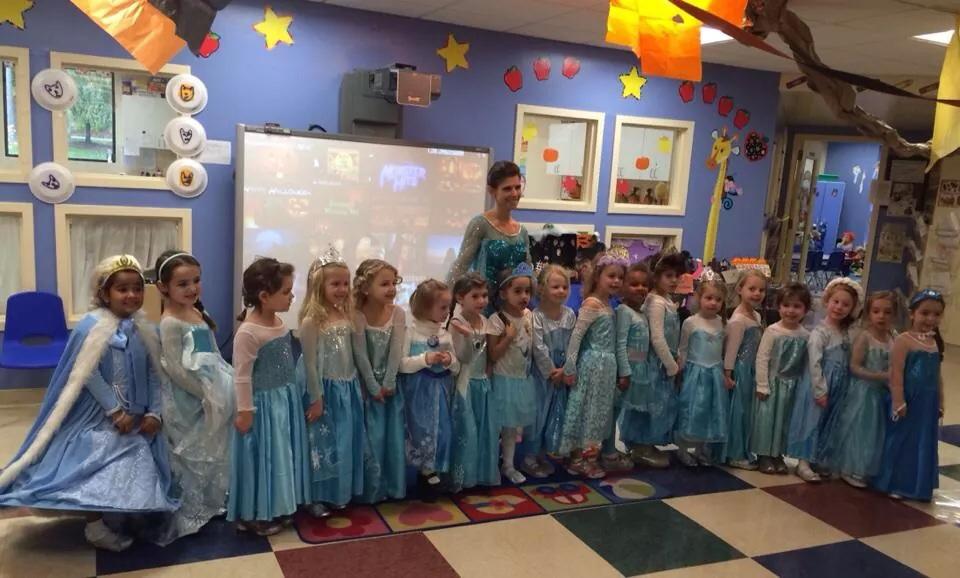
This Halloween, my seven-year-old daughter went trick-or-treating as Elsa. You know, Elsa? From Frozen?

If you haven’t seen Frozen, you’re either living under a rock or don’t have a seven-year-old daughter and my guess is you’re not living under a rock.

Frozen is an animated film about two sisters –– princesses –– the older one of whom has difficultly controlling her power to make stuff freeze. When she –– Elsa –– ascends to the throne, she inadvertently unleashes her power on the assembled and runs away in fear, leaving the kingdom in an icy grip. The younger sister –– Anna –– goes after her and it’s only through Anna's love that she can save Elsa and the kingdom.

Anna is the protagonist. She’s also the more interesting of the two. But like I said, my daughter decided to dress up as Elsa. As did her best friend. And, based on my very unscientific research, 97.23% of girls between five and nine who expressed a preference.

In fact, a dear friend of mine –– Tamara Thompson, founder of the brand strategy consultancy SenseTruth –– happened to be at Disneyland on Halloween and mentioned that of the thousands of princesses she saw, just about the only ones she saw dressed as Anna were pretty obviously the younger sisters of girls dressed as Elsa and too young to have chosen their costumes themselves. In fact, when two sisters were older than around four,  it was apparent that both insisted on being Elsa.

This squares with what I noticed at a Frozen sing-along I took my kids to at a local park this summer.

The question is, what does this tell us? Why do girls want to dress not as the hero of the movie –– the one who’s brave and funny and resourceful and kind –– but as the character who inadvertently hurts others, runs away from the problems she creates, and needs someone else to rescue her?

In my daughter’s case it can be explained by the fact that Elsa wears a turquoise dress. Turquoise is my daughter’s favorite color and has been since… um, well, since she first saw Frozen.

Hmmmm...

Monday

What makes an interesting protagonist (Part 3): Conflict between want and need.

I have a theory about stories. A good story is not just about the conflict between a protagonist and an antagonist. You tell a story like that to four-year-olds.

A good story is also about the conflict within the protagonist, between what he wants and what he needs.

I can't think of a better example of this than 'The Incredibles'.

If you haven't seen the movie, stop reading right now and go rent it. I'm serious. It's one of the most perfectly crafted stories ever and I refuse to teach you another thing until you've seen it.

Okay.

Where was I?

Right. 'The Incredibles'. The protagonist is Mr. Incredible. The antagonist is Syndrome. At its simplest, this is a story about the struggle between the two.

But there's more. What defines Mr. Incredible are two things: his want, which is to work alone, and his need, which is to save the world.

Until Syndrome comes along, those two aspects of his character are perfectly compatible. And even though he's no longer a working superhero, Mr. Incredible the insurance adjuster can't suppress his need to save the world –– he just does it one person at a time.

Syndrome changes everything.

First, he forces Mr. Incredible to come out of retirement. Then he forces Mr. Incredible to realize that he can't do it alone.

Ultimately, the conflict that has to be resolved is within Mr. Incredible. He has to decide whether his want is more powerful than his need.

Here's a tip. It never is.

Mr. Incredible's need to save the world is so great that he'll not only work with someone else, but work with his family -- the last people he'd want to put in harm's way.

In a really good story, like this one, by resolving the conflict between his want and his need, the hero experiences growth.

Even a four-year-old knows that.

Thursday

What makes an interesting protagonist (Part 2): Familiarity.


Oscar makes an excellent point about my blog on the new Star Trek movie and since it's relevant to creating an interesting protagonist, I'm going to write a blog instead of a response. It doesn't matter how bad things get for your protagonist if you don't care about him.

So how do you create a protagonist that your audience will care about?

It used to be conventional Hollywood wisdom that your protagonist had to be a good guy. I don't know if it was 'Butch Cassidy and the Sundance Kid' that changed it for Hollywood, but that's the film that changed it for me. Here you have two really bad guys--robbers, murderers, cheaters at cards--and yet you can't help but root for them.

Why?

A lot of people think it has to do with Paul Newman and Robert Redford, but I think most of the credit goes to William Goldman, the writer.

For me, it comes down to one scene. The one in which Butch Cassidy wants to see just how good a shot the Kid is.

Sundance misses. And then he asks, "Can I move?"

What Goldman did with that was to humanize Sundance. Sure, he's a bad guy. Such a bad guy that he's known for being an incredible shot, and you don't shoot tin cans back in the old west, you shoot people. But he's a bad guy who a) feels bad about missing and b) asks permission to try again.

From that one scene, we can build a picture of Sundance. We can imagine what he's like as a person, not just as a killer, and the secret about protagonists is that we like them because we feel as if we know them.

I'm not talking about giving your hero flaws, although flaws can help. I'm talking about making your hero familiar. A good actor can help a good writer, but only under the leadership of a good director. In this case, George Roy Hill.

Friday

What makes an interesting protagonist (Part 1): Single-minded determination.

It’s been said that art reflects life. It’s also been said that movies are art. If those two statements are true, then movies reflect life.

Which they don’t.

Movies reflect a distilled version of life. In simple terms, they take out the uninteresting. Or should.

Which brings me to the protagonist.

The difference between a movie protagonist and, say, you, is single-minded determination. The protagonist of a movie is attempting to achieve something against overwhelming difficulties. He might have to pick up his dry cleaning or try to figure out why his insurance company won’t cover his acupuncture, but if he does, it’s because those represent the overwhelming difficulties he has to face in order to achieve his goal. Not because these are the things he needs to take care of. And certainly not because it’s stuff he enjoys doing.

It’s an important distinction. Heroes have quests. And quests aren’t something you get to between meetings.

That’s not to say heroes don’t have shit to take care of. That shit is reality and if you’re creating a realistic hero, you can’t have him live in an unrealistic world. But for a movie to be interesting, you want to watch a hero pursuing a goal, not taking Thursday afternoon off to go for a hike.