Monday

Why simple is not so simple.

It's one of the basic tenets of advertising: simple messages communicate more powerfully than complicated ones. 

And yet.

Back when I was a baby copywriter, we used to bitch about how the creative briefs we were given kept getting bigger and bigger. Yes, even at a storied ad agency like Chiat/Day, a place famous for creating simple, powerful advertising. Sometimes the brief for a single ad or commercial would run to four pages.

Whenever we were given a brief, the first thing most of us in the creative department would do is flip through it, skipping over all the background and demographic stuff to the one important line item: What’s the single most compelling thing we want readers/viewers to take away? A simple answer there would mean we’d been given a good assignment. Not because the solution would necessarily be easy, but because even an idiot would be able to determine whether we’d met the criteria. 

It’s hard to keep an assignment simple. Clients who spend hundreds of thousands of dollars on an ad feel as if they’re being asked to pony up for a Ferrari, but not being told whether it will even turn left.

(I once had to work on a billboard that had –- and I’m not making this up –– a list of eight things that the brief said needed to be communicated. There’s a general rule with billboards that you don’t want to go over nine words. Which, as the account person nervously joked, gave us the freedom to throw in a gratuitous “the” or “and.” My partner and I actually nailed it, but unfortunately the headline we wrote had twelve words, so our solution was killed before it ever got shown to the client.)

That was years ago. Since then, media has become lots more expensive. And the vast majority of clients have become accustomed to being regularly deferred to by agencies who are so terrified to lose the business that they refuse to have an opinion, much less take a stand. 

All of which adds up to an advertising landscape that’s fetid.

And then there’s this. 

Forget how dazzlingly funny this is. That’s bonus. The genius is that the very structure requires the spot to say only one thing. The single most compelling message. 

I look at this spot and I see not just a brilliant creative solution, but also a healthy agency/client relationship. I know. That's two things. 

See? Even I can’t help but want to make two points.

Way to go, Martin Agency.

Brian Belefant is a copywriter turned director currently looking for his next assignment. Please call (503) 715 2852 or email belefant@me.com. 

Friday

Just when I was beginning to think there was no hope for advertising.

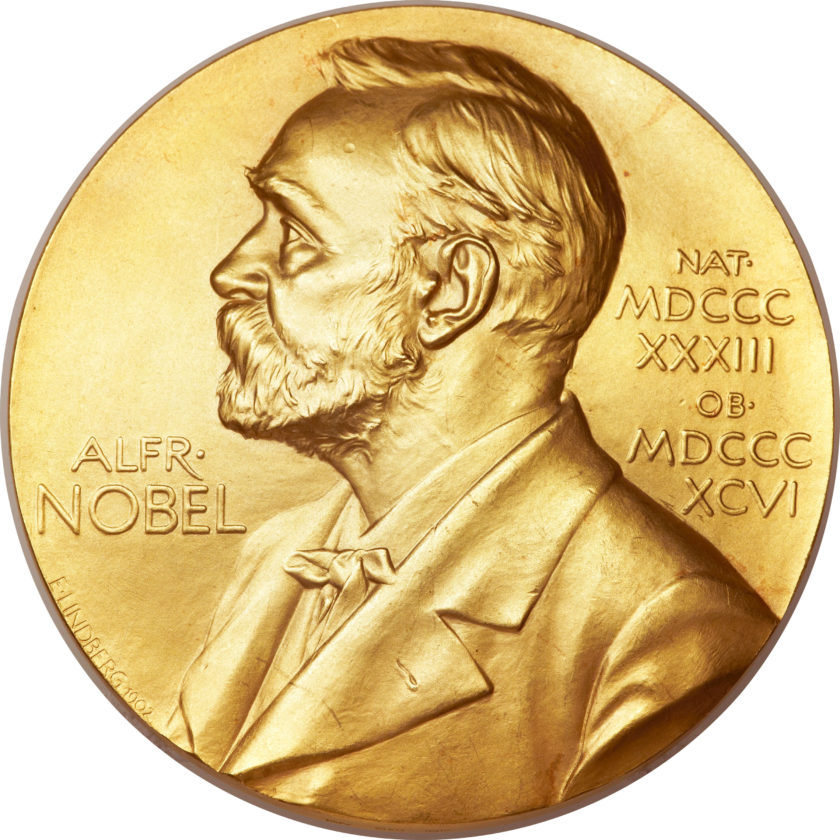
I’ve been pretty cranky about the advertising business lately. So much crap; so little good stuff. It’s gotten to the point that I was seriously considering changing careers, but I’m not sure if the Nobel Prize committee is hiring right now.

Lucky for Sweden, I saw this spot for Organic Valley.


You don’t need me to tell you it’s brilliant –– wonderful idea, super well executed. But you might appreciate me telling you why.

To do that, think about the assignment: Sell the benefits of an organic protein drink.

The obvious solution would have been to draw a connection between what consumers want (to improve their health) and what the product offers ( the perceived healthful advantages of being organic).

The ad agency probably presented some work that did just that. And it was probably good. 

But someone (David Littlejohn, Mike Cessario, Stephanie Gelabert, and Sean Davis) came up with this gem of an idea. Someone (the uncredited account executives) convinced the client it was a good idea. And someone (the uncredited agency producer) found the right team (Fancy Rhino) to put it all together. 

Then they came up with the ancillary stuff: The website (http://savethebros.com), the merch, the Buy One/Bro One offer. 

This. This is what an ad agency should do every single time. Sadly, few do anymore. 

My hat is off to you, Humanaut, and all the people who pulled together to make this spot happen. I hope this portends well for the entire business. 

In case it doesn’t, I’m going to brush up on my Swedish.

Monday

Leave it to a kindergartener to come up with the perfect Valentine's Day gift

Ophelia, at her first art show (2013)
Two years ago, when my daughter Ophelia was in kindergarten, she heard about kids who needed pediatric cardiology. She wanted to help, so like any six-year-old with an oversized sense of the possible, she started an art show. 


The idea was to get each of her classmates to paint a heart on a 5” x 7” canvas and sell them to raise money for the hospital she was born in.

She and her classmates raised $370.

This year is the third year of the show and we’re hoping it’ll be even better. The Splendorporium Gallery has generously offered to display the work in conjunction with their February Pink Show. 

The silent auction will be held during the gallery’s art opening on February 6th, from 7:00 pm until 8:00 pm. It’s a super kid-friendly gallery, which means that instead of scowling people in black, you’re more likely to encounter a llama and no, I’m not making that up. Rojo the therapy llama will be there for kids to play with while you bid on a masterpiece to give to your beloved.

For the past two years, savvy art connoisseurs have been able to pick up a priceless gift for as little as $5.

And when you think about it, that’s a three-way gift. Not only does it show how much you love the person you’re giving it to, but it also encourages a young artist and supports the Randall Children’s Hospital Foundation –– an incredibly worthy cause. 

Please come. And bring your checkbook.

The Splenderporium Gallery is at 3421 Se 21st Ave, Portland, OR 97202 · (503) 953-2885.


Thursday

A movie that's full of drumming and utterly devoid of sex, and that's where the parallel with my high school years ends.

You know what’s cool about being in the DGA? Christmas. This time of year I get screeners for a ton of movies that are hoping to be considered for awards. 

I know, right?

A couple of nights ago I dropped Whiplash into the DVD player. It's a story about a young musical student (played by Miles Teller) and his relationship with an abusive teacher (played by JK Simmons, who must have had a blast with the role because he gets to be a completely glorious asshole).

The fact that I’m singling out this movie might lead you to believe that this is an attempt to influence the voting. Nope. A lot of good films came out this year and I’m going to leave it to the Academy to decide whether Whiplash happens to be the best of them.

The reason I’m bringing it up is because it does something I’ve never seen before. Both the protagonist and the antagonist are pursuing the exact same thing. 

Exact.

The two characters tell you (by way of actions and dialogue with other characters) exactly what they intend to accomplish and the lengths they’re willing to go to accomplish it, so the movie doesn’t even have to fall back on a “surprise” reveal to justify their actions.

From a story point of view, that’s an extraordinary thing to pull off. And I happen to think it does. Despite both characters’ single-minded determination (see my post from June 5, 2009 about that) to achieve said goal, the film is able to create and elevate the conflict all the way through to an ending that’s simultaneously surprising, satisfying, and totally, perfectly, completely inevitable.  

Okay, I lied. I would like to influence the voting. Members of the Academy, take a look at the dramatic structure of this story. And consider nominating Damien Chazelle for Best Screenplay.

Tuesday

The Sundance Kid is autistic (and no, I’m not qualified to diagnose, but I do know a thing or two about autism)

Two nights ago, while my seven-year-old daughter struggled with a pencil and paper to work out the answers to her math homework, my six-year-old boy listened to the problems and called out the answers.

It’s kind of neat (or annoying, if you happen to be a seven-year-old) that he can figure out the answers to second grade math problems in his head. What’s more remarkable (and even more annoying) is his technique. He runs at a high backed chair, throws himself at it headfirst, and calls out the answer to the problem as he lands in kind of a headstand. 

"Thirty-two!"
Dashiell reminds me of Robert Redford. 

You ever see Butch Cassidy and The Sundance Kid? it’s one of the greatest movies ever written (by William Goldman, who also wrote The Princess Bride, by the way). 

See it again. And take a close look at Sundance. The character. 

He’s introduced at a card game where he keeps winning. Dashiell’s like that. He figures out the way things work and then uses that knowledge to make them work better. At six, he can already beat me at checkers sometimes and no, that’s not saying a lot, but bear with me here because I’m going to make a point and it’s going to be a good one.

The man Sundance is playing against is convinced he’s cheating and it looks as if there’s going to be a shootout. Sundance doesn’t like to be called a cheater. The movie leaves it pretty ambiguous as to whether he actually cheats, but I’m convinced he doesn't because Dashiell wouldn’t. He knows the rules and he abides by them. He hates losing, but he hates cheating even more.

Look at this picture upside down and the resemblance is uncanny.
Butch Cassidy (Paul Newman) walks in and offers the man a way out. All he has to do is invite Sundance to stick around. He doesn’t have to mean it and Butch even promises that they won’t. He just has to make the gesture. My son is the same way, except for the shooting someone part. He has a powerful sense of right and wrong. Calling someone a cheater when he’s not is wrong but everything can be made okay if you simply acknowledge that you messed up.

As the Sundance Kid walks out, the card player calls after him. "Hey, Kid." But Sundance doesn’t respond. That’s my kid in spades. His mind is busy –– so busy that it’s sometimes impossible to get his attention. 

But the things that seals it? When Sundance needs to prove he can shoot in order to get a job as a payroll guard in Bolivia. Percy Garris, the mine owner, tosses a piece of clay or wood or something into the street and tells him to shoot it. Maybe it’s a plug of tobacco.

Sundance misses. 

“Can I move?” Sundance asks. When he moves, he can’t miss. Put my kid in a chair and make him sit still and he can’t even begin to do the math he’s supposed to be learning in first grade. But let him loose…

I don’t know if William Goldman intended it, but I’m going to say he’s written The Sundance Kid to be autistic. I know what you’re thinking. Redford makes eye contact. He holds a conversation. He’s funny. Even charming. He’s also principled, dedicated, and extraordinarily physical.

The sign needed straightening.
All these things are like my son. My son who can climb anything, has a hard time responding when people try to get his attention, believes intensely in fairness, and can solve second-grade math problems in his head, but only when he’s running full tilt at a chair. 

Autism isn't limited to the stuff we used to think it was. I know this because Dashiell was diagnosed as autistic about six months ago. 

I always knew my boy was a little quirky. Now we have a word for what makes him different, a word that doesn’t change him at all, but hopefully can get us some understanding and extra support at school where they seem to think sitting in a chair is the only way to solve a problem.

If not, maybe my son will grow up to be a notorious outlaw.

The Ratio of Elsa To Anna And What It Means

Anna? Where are you?
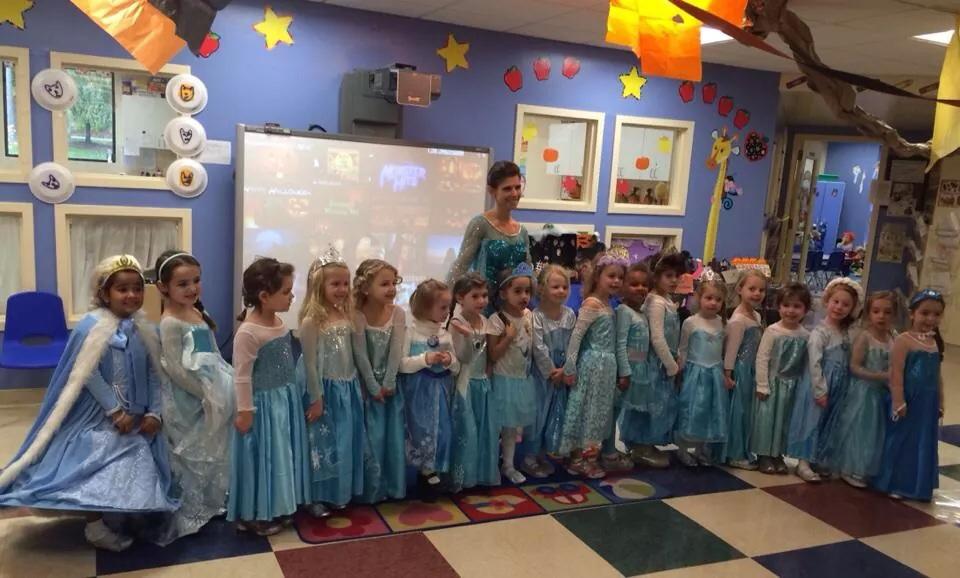
This Halloween, my seven-year-old daughter went trick-or-treating as Elsa. You know, Elsa? From Frozen?

If you haven’t seen Frozen, you’re either living under a rock or don’t have a seven-year-old daughter and my guess is you’re not living under a rock.

Frozen is an animated film about two sisters –– princesses –– the older one of whom has difficultly controlling her power to make stuff freeze. When she –– Elsa –– ascends to the throne, she inadvertently unleashes her power on the assembled and runs away in fear, leaving the kingdom in an icy grip. The younger sister –– Anna –– goes after her and it’s only through Anna's love that she can save Elsa and the kingdom.

Anna is the protagonist. She’s also the more interesting of the two. But like I said, my daughter decided to dress up as Elsa. As did her best friend. And, based on my very unscientific research, 97.23% of girls between five and nine who expressed a preference.

In fact, a dear friend of mine –– Tamara Thompson, founder of the brand strategy consultancy SenseTruth –– happened to be at Disneyland on Halloween and mentioned that of the thousands of princesses she saw, just about the only ones she saw dressed as Anna were pretty obviously the younger sisters of girls dressed as Elsa and too young to have chosen their costumes themselves. In fact, when two sisters were older than around four,  it was apparent that both insisted on being Elsa.

This squares with what I noticed at a Frozen sing-along I took my kids to at a local park this summer.

The question is, what does this tell us? Why do girls want to dress not as the hero of the movie –– the one who’s brave and funny and resourceful and kind –– but as the character who inadvertently hurts others, runs away from the problems she creates, and needs someone else to rescue her?

In my daughter’s case it can be explained by the fact that Elsa wears a turquoise dress. Turquoise is my daughter’s favorite color and has been since… um, well, since she first saw Frozen.

Hmmmm...

Friday

How to survive a slasher film.

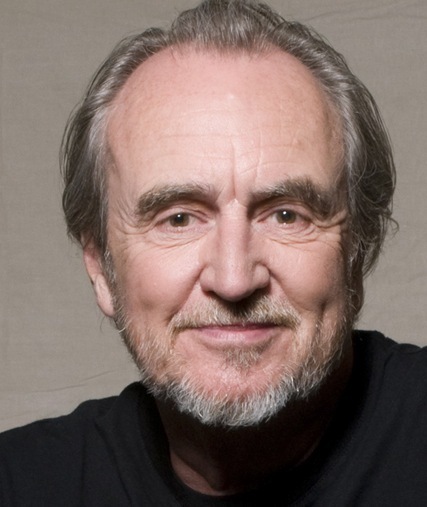
The last time I hung out with Wes Craven, he was kind enough to share his thoughts on the philosophy of the slasher film.

One of the things he said was that the genre was about morality: only the most morally pure teen would not only survive, but vanquish the slasher. Vanity, greed, sloth, and particularly lust were the distractions that turned all the other teens into victims. 

I know. Simple, right?

Naturally, I decided to flip the notion on its head. I wrote a script –– a coming-of-age-as-a-slasher flick –– the premise of which was that only the most morally impure slasher would survive and vanquish the teens. It’s probably the strongest film I’ve written, so thank you, Wes.

The reason I mention all this is that I was issued a challenge by Alexandra at Man Crates, a company that ships gifts for men in custom wooden crates that have to be opened with a crowbar. She wanted to know what I’d want in a crate in order to survive a horror movie I found myself trapped in. 

You know where I’m going with this, right?

If I’m trapped in a slasher film, it’s a pretty safe bet I’m not one of the teens. At my advanced age, I’m more likely going to be the slasher. So here’s what I’d need:

  1. Music. Killing, like editing, depends on rhythm. I’ll take boxed sets of Zepplin, Stones, and AC/DC, preloaded onto an iPod Shuffle (Product Red, of course) because the battery is going on the one I have. 
  2. Polyester clothing. You know what a bitch it is to get blood stains out of the pima cotton and wool blends I normally wear? While you’re at it, throw in one of those jumbo-sized jugs of Tide, the kind with enzymes in it. 
  3. A good knife. I’m partial to the Misono UX10 Gyuto 240mm, but I could make do with a Shun Premier 10”. Wusthoffs have great handles but you really give up a lot of blade flexibility.
  4. Coffee. Slasher films take place at night and I gotta stay awake. Lately, my brew of choice is Extracto Guatemala San Pedro Necta. 
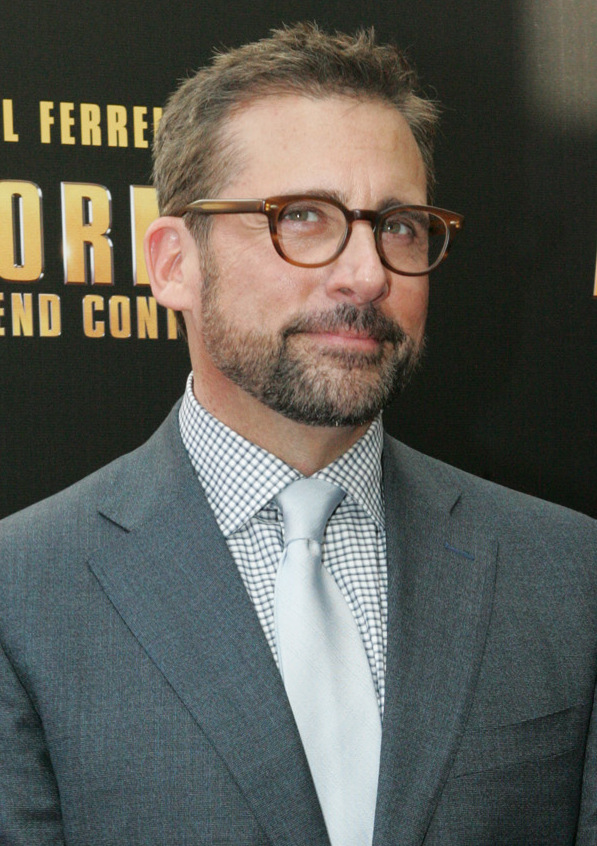
  5. A buddy. I know slashers work alone, but this is my story and I think a slasher buddy movie would be more interesting. Jack Black would be fun, but of course he’d probably end up turning on me at the end. How about Steve Carell? I bet he would die well.
  6. A good motivation. Sorry, but so many slasher films fail here. Why? Why do I want to kill all those young, beautiful people who have no concept of mortality or morality and who spend disproportionate minutes of screen time taking showers, getting wasted, and having sex… Um, never mind. 
One last thing. A crow bar. 

Oh, and Alex? Send it separately. And first.