Showing posts with label directing. Show all posts

Tuesday

A Moving Post. And By That I Mean It's Hosted Elsewhere

I've been publishing posts as The 60 Second Director for well over six years and if you've been reading my stuff since then, thank you.

I'm consolidating my internet footprint as a way to manage all the links and stuff. As part of that process, I'm moving my blog. You can now read all my snarky, boring, and even occasionally helpful blog posts at http://belefant.tv/category/60-second-director.

If you want to be sure not to miss a single word, why not add your name to my mailing list when you click over there? That way I can sell your contact information to Google and make like .00000000000004¢.

Which I'm not going to do, by the way.

That was supposed to be funny.

Wednesday

My two cents about Zooppa –– which is less than what my opinion is worth.

The actual email. Thanks,
Mark, for saying such nice
things about my work.
I recently got an email from someone at Zooppa, offering me a "filmmaking opportunity.” The opportunity is for me to create a commercial for a stapler company and if my finished piece is determined to be one of the ten best, I’ll get to share $25,000.

I’m not going to do it. And I suggest you don’t, either. Here's why:

Let’s say I’m the best of the best. And that each of the nine other submissions considered to be one of the ten best “wins" $50.00. That leaves me “winning” $24,550. 

There’s a reason that word “winning” is in quotes. Because it isn’t winning. It’s earning. 

To earn that money, I have to first work as a copywriter. I’d study the brief so I could get to know the marketing strategy, advertising strategy, and brand voice. I’d familiarize myself with the target market, understanding their perception of the brand and its competitors. I’d also evaluate the product and its competitive set to determine opportunities to communicate the benefits of a feature that would be relevant to the audience. 

Only then would I be able to come up with a script.

Me having an idea.
What it looks like. Really.
Once the script is prepared, I’d have to work as a producer. I’d break down the script in order to create a budget to shoot the piece and put together all the necessary resources. I’d arrange for casting and location scouting, procure equipment and the people to operate it, secure insurance to cover something happening to a piece of equipment or a person. If anything costs money I’d have to pay for it. 

By this point I would have already worked for about a week and spent something, even if it isn’t much. 

If you’ve been reading my blog at all you know that working as a director involves a lot more than showing up and calling “action!” Before I can even dream of calling “action!" I'd have to cast actors, find locations, and create the world I want to create through art direction, lighting, and props. 

When it finally comes time to shoot the piece, I'd get to be the director, but I'd never stop being the producer, the person to deals with the inevitable problems –– equipment that breaks or doesn’t show up, people who flake, actors who are happy to work for free, but simply MUST have fresh dahlias in their dressing rooms...

I wouldn't get to stop being a producer once the footage was all shot because there’d be equipment to return, a location to clean up, and crew members to pay. But I might also get to be an editor. Somebody’s got to digitize the footage, sync the sound, pull the selects, edit the piece, do a color-correct, and mix the audio. 

Oh, and then there’s music. We might want music. And a voice over. 

Is there a title that comes up with the logo? Yeah, someone would need to create that, too.

The deadline for submitting to Zooppa is September 22nd, which means I'd have three weeks to write, produce, direct, and finish this thing. Pretty tight, but yeah, I could do it if I worked every day.

Twenty years ago, I was bringing in $1,000 a day as a freelance copywriter, but let’s forget that I’d just come off a job as Senior Vice President/Creative Director at BBDO Worldwide and let’s also forget that you'd need $1,568 today to buy something that cost $1,000 in 1995. Instead, let’s say a copywriter is worth $350 a day. 

Let’s also say a producer is worth $350 a day. And because we’re being all egalitarian and stuff, director/editors get to make $350 a day, too. 

That means I’d be paying myself $22,050 to make this thing, which leaves a whopping $2,500 to pay the crew and actors, rent the location, props, and equipment, and buy the insurance.

And that’s if I win. Which I decided way up there at the top of this rant that I would. 

You losers? All you other people who go to the same trouble that I do and who come in second? You'd get to spend $22,050 worth of your cut rate time and $2,500 of your money in order to collect $50. Plus you wouldn't get to say you made a real commercial. 

Zooppa has come up with a business model that is predicated on people like me being willing to invest their time and money –– plus assume all the risk –– in order to create advertising on behalf of its clients. It's like a lottery, where the potential payout doesn't even cover the cost of the ticket.

So no, Zooppa, I won't be taking you up on this "opportunity", thank you very much. Even if it were my first time looking into the eyepiece of a camera –– and it isn't –– if I'm creating something a legitimate business values as part of its marketing communication, I deserve to be treated as a professional. And the people I hire to work with me do, too. 

Don't get me wrong. I'm more than willing to cut my rate or work for free –– just like most everybody I know in this business –– but when I do it's because I either believe in the project, love the people, or see an opportunity to go to France. 

Zooppa, you're asking me to invest both my time and money to further the marketing goals of a legitimate, profit-seeking enterprise. The only remuneration I'm guaranteed is two staplers, which I can keep as long as I promise to submit a commercial.

It's not a stapler. It's a paycheck.
Three weeks' work for two staplers? Wow. What an "opportunity."

Brian Belefant is a diretor who is not shooting a stapler commercial this week and just happens to be available to work on something more legitimate, more worthy, or more likely to involve travel. 

Thursday

What to look for in a line producer (part 2)

You know what sucks about working as a director? You really don’t get to see how other people do what you do. 

I figured out a way around that. What I did was sign up with an extra casting service. I’d get booked as an extra on other people's sets and get to see how different directors work. 

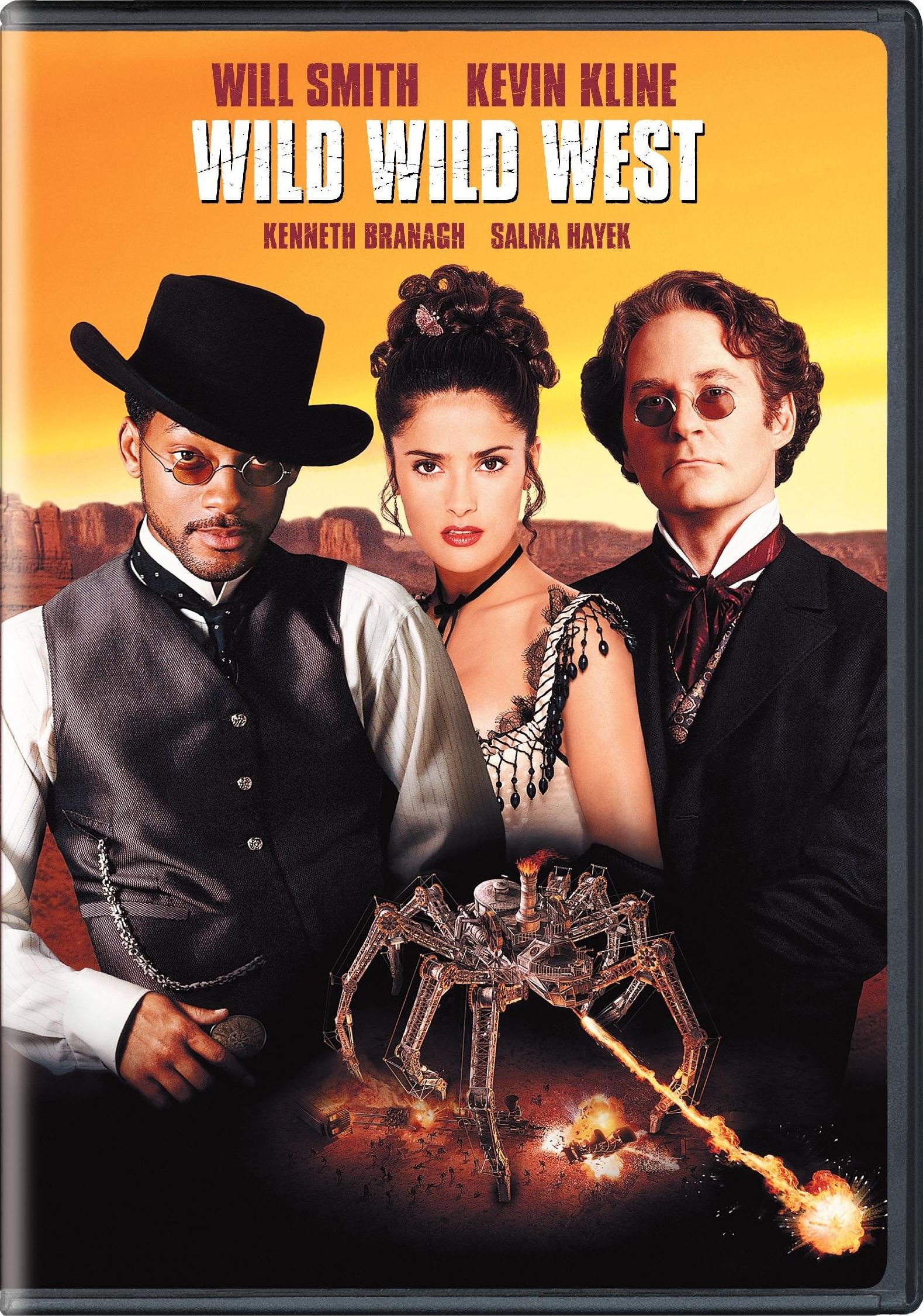
Remember that movie ‘The Wild, Wild West’? I was in that.

Don’t bother looking for my name in the credits. They hired hundreds of us, put us in genuine wool Confederate army uniforms, had makeup people apply facial hair, and then told us to sit in a non-air-conditioned soundstage all day in sweltering Burbank, waiting to be called to the set. 

Fun.

I had been booked for four days. When I got home at the end of the third day I got a phone call. A directing job I'd been hoping to get had come through. 

Of course I came in for the fourth day –– I’d put off starting the directing job because I’d committed to the extra work –– but since the scenes I was supposed to be in hadn’t been finished, the Assistant Director made an announcement to the bunch of us that they’d be needing us to come back for a few more days. 

I took the AD aside and told him that I was sorry, but that I couldn’t make it back. And this guy? He tried everything. He appealed to my greed. (“I’ll see if I can swing you more money.”) He appealed to my sense of duty. (“You committed to this project. You can’t just leave us in the lurch like this.”) He even tried to threaten me. (“With an attitude like that, you’re not going to go very far in this business.”)

Finally, out of ammo, he asked. “What could you possibly be doing that’s more important than helping make this film come together?” 

I didn’t want to do it, but I had to tell him. “I booked a job directing a commercial for American Express.”

“Oh.” 

There are two points to this story and they both aim square at the second most important thing you need to look for in a producer: 

The second most important thing to look for in a line producer is someone who’s committed to seeing your project through.

Point one was that I was not that. Not to Barry Sonnenfeld, anyway, or the rest of the people on ‘The Wild, Wild West’ and maybe that’s why the movie turned out to be such a turd. Point two was that the AD was. He did his very best to get me to come back, but no matter how hard he tried I gave him something he simply couldn’t trump. 

Granted, I wasn’t the producer and neither was he. But here’s the thing. There will always be reasons. People get sick. People’s kids get sick. Relatives die. Those and many more are legitimate reasons to not come into work and if you don’t understand those you shouldn’t be in a position of authority.

It’s the illegitimate reasons that can never ever ever get in the way. Like the producer who disappeared on me because the surf was really good. Or the one who went incommunicado for hours at a time as soon as the bars opened. 

When you hire a producer, make sure you hire one who wants not only to be a producer, but wants to be your producer. As uncool as it is, people will ditch one job for a better one and let’s be honest, your masterpiece might not be the best job a producer is in contention for.

Remember the first most important thing to look for in a producer? Ethics? This is a another reason that’s Thing Number One. An ethical producer will finish out his or her commitment to you and if Spielberg calls, he or she will ask him to wait until this project is finished. 

I don’t know Steven Spielberg, but I’d be willing to bet you he’d respect that. After all, he’s not looking for someone who’s going to disappear in the middle of his production, either. 

As for Barry Sonnenfeld, if you’re reading this? Dude, I’m sorry.

Brian Belefant is a copywriter turned director still finishing up post production on a corporate video that you'll never get to see because of all the non-disclosure agreements and stuff. But hey, if you're looking to put together your next project, maybe he'll be done by the time you pull the trigger. Call (503) 715 2852 or email belefant@me.com.

Tuesday

How to watch your own film

If you think this is Nice, you're close.
It's Cannes.
I was super lucky. I learned this lesson at Cannes, where a public service announcement I’d directed was chosen to screen. Major venue. Sophisticated audience. Sold out theatre. (Did you notice I spelled it with the R before the E? Yeah. All French and everything.)

So anyway, sold out theatre, which meant that by the time I got there I ended up having to stand and I guess the French fire marshall isn’t as particular as the ones we have here because even after all the seats were taken, people kept piling in. And all of them were going to see the tiny thing we managed to pull together for less than $6,000 –– and that included what we spent to fix the scratch on the negative, which by the way wasn’t David Claessen’s fault. He did an amazing job as the cinematographer on this and I have yet to thank him appropriately.

Where was I?

David Claessen –– extraordinary cinematographer
By the time the lights went down, the aisles were full and I’d been shoved all the way to the front of the theatre, almost underneath the screen, which meant I didn’t get a very good view of anything that was being projected. But I got an incredible view of the audience. 

I got to see people engaged, bored, interested, fidgeting…

When my little gem came on, I wanted to see it. I mean, I WAS SCREENING IN CANNES! 

But I couldn’t, really. And besides, it’s not like I hadn’t seen it before. So I watched the people watching it. 

The whole spot happens in one take –– that’s the way I designed it –– and there’s an instant where I want you the viewer to realize what’s going on and just how horrific it is. It’s one thing for a director to intend that; quite another for a director to make it happen. And I made it happen. The entire theatre gasped at exactly the same moment.

(If this video doesn't play,
try this link: https://vimeo.com/75154837)

“Damn,” I thought to myself. “I am very talented."

And this is why I was lucky. It happened early in my career. 

So early in my career that I figured, hey, I’m going to watch people watch my stuff every chance I get because that way I’ll get to see for real just how talented I am. 

What I came to find out pretty quickly was that while everything worked exactly the way I planned for it to in this one piece, other times stuff didn’t go quite the way I thought it would. A joke I thought would get a huge laugh would only get an appreciative nod. Or a narrowing of the eyes. One time I happened to be in a bar when a commercial I’d just finished working on, one that I was super proud of, came on the TV. Nobody even looked up. 

The thing is, I wouldn’t have known about those reactions –– or non-reactions –– if I hadn’t been watching for them. 

And I wouldn’t have been able to fix the problems if I hadn’t seen for myself where they were. 

I’ve been to a lot of Hollywood screenings where the directors sit in the back. When the film is over they nod and smile and graciously accept the praise of the people filing out. People who almost without exception tell them how wonderful they thought it was. 

Sure, if you’re sitting in the back it’s easier to duck out so you can take a call from your agent or Martin Scorcese. But the directors I respect most don’t sit in the back and wait to hear people tell them what they want to hear. They turn off their phones, stand in the front, and see for themselves.

Brian Belefant is a copywriter turned director totally excité for his next assignment. Please call (503) 715 2852 or email belefant@me.com.

Friday

Let's be careful out there.

One of my first projects as a baby director was a spot I offered to finance and shoot for a friend of a friend. It was a pretty ambitious production –– a post-apocalyptic story involving a golfer in a gyrocopter. 

At one point, I wanted to give some notes to the actor, so I walked from where I’d been standing by the camera toward the flying contraption he was sitting in. 

I didn’t notice that the blades were spinning. 

Okay, I did, but I was concentrating on my shots and the stuff I wanted to talk about with the actor. Between the angle of the blades and the speed they were turning, I was about to be decapitated. 

If you think walking into the spinning blades
is scary, imagine flying the damn thing.
Spoiler alert: I didn’t die. I got about ten feet before I was tackled to the ground by my Assistant Director. Among other things, the AD is the person who keeps the set safe. 

I’ve been thinking about this because I’ve been reading a bit about Randall Miller, the director of ‘Midnight Rider’, and how he pleaded guilty to involuntary manslaughter for the death of Sarah Jones, the camera assistant who was killed when a train unexpectedly plowed into the set they’d built on a train track. A lot of what's being written makes it sound as if filmmakers are cynical taskmasters who will put people’s lives at stake in order to get a shot.

I don’t know Randall Miller or any of the other people involved in making that film, but I’m pretty sure they didn’t want Sarah Jones to die. And no, not just because they had more filming to do. 

But here’s what happens. 

'Burning Passion', a pretty ambitious
(and kind of dangerous) short film I directed.
A film is a project. A gloriously fun and exciting project, full of potential and fraught with unexpected complications. 

If you hire well, everybody on the project –– even the people who really only stand to benefit financially, like the guy who drives the motor home and the people who put up the lights –– everybody gets excited about this thing you’re making. We all pull together. 

And so when it comes to making a shot a little better, heck yes we want to do that. 

"Should we shoot the dream sequence on the bridge?" Yes. "There’s a train coming. Can we get one more take?" Yes. If we take the rig down and put it back up, we’ll lose the light or fall behind. 

My brother hates flying. He once explained to me why he was more afraid of take offs than landings. “When you’re landing,” he says, "the pilot wants to be on the ground. So he’s less likely to pull up if something goes sideways.”

It’s the AD’s responsibility to not only be aware of the safety issues, but to make them clear to every single person on the set. We have what's called a Safety Meeting every time we’re doing anything that might put anyone in harm’s way, whether it’s working with a cat that might scratch an actor or a candle on a mantel that might fall over and set fire to the chair. 

Yeah, when you're not shooting real bikers wielding real knives or creating a gag to look like flaming ejaculate (both of which I'm proud to say I've done) the safety meetings can be pretty annoying. We’re excited to make this thing. We don’t want to freak out because we’re filming a five-year-old holding a sparkler, but you know what? Somebody needs to. 

I wanted real bikers. I got real bikers.
That’s why when you hire an AD, yes, you want the person who’s going to be excited to work on your masterpiece and do everything possible to make it better. But if your plane is headed for the ground, you want the pilot who’s going to get it onto the ground, quickly and safely. Even better, you want an AD who does the things that keep the plane from going out of control in the first place.

I suppose I was fortunate to have learned that lesson early on when my AD quite literally saved my life. I hope my writing is dramatic enough to make you think seriously about it.

Brian Belefant is a copywriter turned director currently rooting around for his next assignment. Please call (503) 715 2852 or email belefant@me.com. 

Post Script: I sent a draft of this blog post to Laura Nisbet Peters, one of the finest (and funniest) Assistant Directors I know. She offered the following thought: 

"I’ve been in situations like that. The weirdness of it all is that the guy who hires you, and who may or may not hire you later, is the guy to whom you have to say no. Yes, the AD is the safety rep, but the director and the producers are his/her bosses. Accidents that shouldn’t have happened serve as the ammo you need for when you are alone standing your ground with only your tiny sling shot.”

Are you listening?

Wednesday

Sometimes the only way you can tell something is art is because it was made by an artist.


How's the weather up there, Mr. Lincoln?
Did you see 'Lincoln'? Go see it. 

Not the whole thing. The first five minutes will do. Go ahead. I'll be here when you get back.

Okay. Notice anything… funny? I'll give you a hint. It's the scene at the beginning, where Lincoln (Daniel Day-Lewis) is talking to the soldiers. Lincoln is sitting on a covered platform; the soldiers are standing on muddy ground. Tents are pitched around them. Campfires burn.

When we're looking at Lincoln, it's raining. Hard. That backlight thing Steven Spielberg likes so much –– with shafts of light that illuminate the weather –– makes it impossible not to notice. But when we're looking at the soldiers Lincoln is talking to –– same time, same conversation –– nary a drop is falling.

It's tempting to call this a mistake. It isn't. 

It's not a mistake because while in real life, we have to put up with whatever weather we're given, as directors we get to make whatever weather we want. 

If we want rain –– even if the forecast calls for a 90% chance –– we bring in water trucks and hire crew members to build and operate the rigging necessary to make it look natural. 

If we don't want rain it's a little easier. It takes a serious downpour to register as rain on film. Still, if there's money in the budget and we're not shooting in Southern California, we bring in tarps or silks and rigging and hire crew members to build and secure the rigging and light through and/or around it. 

That's what we do. We make daytime look like night, winter look like summer, and sunny look like cloudy. 

This goes a long way toward explaining why movies are so damn expensive to make. 

When the UPM and the Assistant Director (Susan McNamara and Adam Somner) broke down the script for 'Lincoln' with Spielberg, they went through every single scene and asked Mr. Spielberg, among other things, whether he wanted any special weather effects. That's their job.

It’s the UPM’s job because it affects the budget. Rain takes trucks and water and rigs and all sorts of ancillary characters that need to be added to the number of people to be wrangled and fed and provided parking spots and restroom facilities on that day. It’s the AD’s job because it affects both the shooting schedule and the safety of the crew members and actors. The three of them have more than 100 films under their collective belts. This ain’t none of them's first rodeo.

Then there's the script supervisor whose job it is to make sure that continuity is maintained. When Anna Rane showed up on the day they shot that scene, she would have asked Mr. Spielberg if he was sure the scene was going to cut, what with rain when the camera was pointing in one direction and no rain in the other. You don't get to be script supervisor for Steven Spielberg by letting huge continuity lapses happen. 

And don't forget the crew. As in the entire crew. The gaffers who lit the scene. The grips who rigged it. Maybe they didn't all notice, but I'll bet some did. I guarantee you Ryan Cole did. He's the sound recordist who had to fight the sound of the rain in one shot and didn't have to deal with it in the reverse. 

I figure one of two things happened here: Either a) somebody made an announcement to the entire crew that yes, they knew the rain gag was going to be inconsistent, but that's what they were going for or b) Spielberg had to contend with a relentless parade of helpful people pointing out to him that they were shooting rain when there wasn't rain before or that they weren't shooting rain when there was rain before. 

I mean, seriously, if you were one of the more than 60 production assistants on this show –– even if it was your first time stepping onto a film set –– wouldn't you go out of your way to be helpful in hopes that you’ll impress someone enough be invited to the next one or get promoted to a better, higher-paying job?

No, I'm certain this scene was shot just the way Spielberg intended it to be. And it must have worked for the members of the Academy, too, because he got nominated for Best Director.

All of this is leading up to a point and the point is this: I don't get it.

I don't get what he was going for. I don't understand why you'd shoot a scene that is so clearly discontinuous. 

I suppose it's art. To me, it smells a lot like Kool-Aid.

Thursday

Jesse Blanchard knows more about 3-D than you do.

'Shine', Jesse Blanchard's 2-minute, 49-second masterpiece
When I spoke to my buddy Jesse Blanchard about a year ago, he was all excited to build a 3-D rig he'd dreamed up. A couple of nights ago, he invited me over to see the result: a short film that lasts less than three minutes. (If you want to see it, click here.)

It's been a busy year for Jesse. He didn't just build a 3-D rig and shoot a film with it. He built one, tested it, refined the design, built another, tested it, refined the design, built another...

All in all, I saw five 3-D rigs at Jesse's place. I have no idea how many prototypes he went through before the first, or how many tweaks he made to each of the designs once he built it.

What I do know is that through this process, Jesse went from knowing about as much as you or I do about 3-D to knowing pretty much everything there is to know about 3-D. 

My version of Jesse's story is that rig I built last year to do that one effect: with a continuously moving camera, create the impression of going forward in time, backward in time, and then forward in time again. Like Jesse, it took me a year to build a working prototype. Like Jesse, I went through lots of designs. And like Jesse, at the end of the process, I knew more about messing with time than most people outside of quantum mechanics will ever know. 

My result is even shorter than Jesse's: A 60-second commercial, which tells a wonderful little story, but to be honest, the best part isn't the wacky messing-with-time shot. It's fine. It does the job. But a couple of other elements get more smiles and nods of approval.

Will Jesse or I ever recoup the money we invested? Will we ever be compensated for the time and energy we put into these projects? Will we ever get a phone call from Steven Spielberg, begging us to accept a huge amount of money for the opportunity to use what we came up with?

I can't tell you.

But I can tell you this. It's one thing to have an idea, quite another thing to do the hard work of making your idea come to life. 

Jesse may never get an opportunity to shoot another project in 3-D. And I may never have a job that calls for a continuously moving camera that moves through time forward, backward, then forward again. But both of us are a lot better directors now than we were a year ago.

Friday

A really nice commercial. Then I actually saw it.


Last night, this spot was on one of the TVs at the gym. I saw about 45% of it with no sound, from across the room, while I was trying to use the eliptical machine. But that was enough.

Enough to know that the line was going to be "Wash your day away."

Nice.

I was intrigued enough with the spot that when I got home, I went onto YouTube to see the whole thing, top to bottom, with sound and no distraction.

You know what? It's worse.

I was right about the line, by the way. But 'Car Wash'? That's the music they chose? And paid to license? I would have lost that bet.

It's not just the music, though, that makes this spot a disappointment. It's the fact that there's a really unique (although in my mind, of questionable value) point of difference to the product being advertised, and yet the message is generic enough to have been used for any shower head. It's as if somebody had come up with this spot for the new business pitch, before they actually got into the tactical messaging, and trotted it out for this assignment. Which happens, by the way, more often than people will admit.

This whole episode reminds me of a moment I had when I first moved to New York years ago. I was shopping for a house plant and heard a girl's voice from the other side of a row of ficuses. She said, presumably to a friend, "That's my kind of plant."

Five words, but there was something about her voice, both the quality and the inflection, that touched me. The way she said that one sentence made me think that this was somebody I'd want to meet. Maybe even marry. But by the time I rushed around to see where the voice had come from, whoever she was had vanished.

For years, every girl I dated or even liked was unintentionally (and unfairly) compared to the hypothetical ideal that that voice created, until I ultimately ended up marrying someone whose other strengths compensated for a voice that –– next to Mystery Plant Girl's –– was brash and a bit nasal.

As I look back, I'm glad I never met the girl who said those words.

I wish I never saw the entire Delta Faucet spot.

Wednesday

More proof I have no clue what I'm talking about.

Not long ago I judged the Student Academy Awards. Which is a pretty prestigious honor, by the way, but not the point here.

One film in particular captivated me. I don't think I'm supposed to reveal which one because the awards haven't been announced.

The thing was, it didn't captivate most of the other judges.

One of the other judges liked it as much as I did, but she had to leave before we were finished, so it was up to me to fight for the film. Which I did. I managed to get it a second shot, to have it screened in front of the entire judging panel at the finals.

Where it went down to defeat.

The films that were selected weren't bad, but frankly, they didn't have something that this one did. They all had heart, story, and craft, but this one also had something extra. It broke ground. The filmmaker understood the potential of the medium and told her story (I think I'm allowed to reveal that she was a her) in a way that could only have been told on film.

Unfortunately, at the finals, I couldn't make that case. All we could do was vote.

So what's my point?

It's not that I don't know what I'm talking about. And it's not that the other judges were idiots. It's that my opinion is just that. My opinion.

This is a tough lesson to learn, especially when you're starting out. But most people you show your work to aren't going to get it. Those that do will never –– and by never I mean really, really rarely –– like it as much as you do.

I wish I could talk to the filmmaker of that film that isn't going to win a Student Academy Award. I'd tell her that she's a prodigy. That her audience, in spite of being a prestigious panel of filmmakers, wasn't sophisticated enough to understand what she accomplished.

And I'd tell her to keep working. Because the only way she'll ever find an audience is to create stuff and put it out there.

Friday

How you buy often indicates how you make

Apizza Scholls –– truly magnificent
pizza in Portland, Oregon


The other day I was talking with a producer buddy of mine about pizza. He buys the cheapest pizza he can find. And he prides himself on using coupons to save even more. 
Another producer I know insists on going to the most expensive pizza place in town. It's good. But I'm not convinced it tastes the best.
As for me, I like pizza. A lot. I lived in New York and developed a taste for wood-oven pizza like what you get at John's. The pizza I like to get is in a place with formica tables, in a part of town surrounded by bars and tattoo parlors. I don't find the area particularly scary, but some people do.
What does this have to do with filmmaking? Well, it's interesting.
The cheap producer makes things the way he buys them. He's always looking for a way to save a buck, and doesn't see the point in spending money on a better camera, the really good dolly grip, or the brand-name cookies for the craft services table.
The profligate producer is what we call a "star fucker." He hires the most famous people he can find and if nobody's more famous than anybody else, he'll go for the person with the highest rate. If there's an expensive piece of equipment out there, he'll not only find it, but figure out why he has to use it.
And then there's me. I'm looking for the unique. The expressive. The solution that helps me to evoke the feeling I want to create. If it's expensive, I'm happy to spend the money. But if it's cheap, I'm even happier.
The interesting thing is that by and large, none of us has enough money –– ever –– to do a job "right." So you would think that the cheap producer would be at a distinct advantage. And sometimes he is.
But the star fucker producer isn't exactly starving. Because he speaks with such conviction about the stuff he thinks has value, he's often hired to pull off a job where a mediocre piece needs something to make it work better.
As for me, I feel fortunate in that my taste is distinctive, but not necessarily expensive. Sure, I need certain equipment to achieve the look I want, but I know enough about every job on the set that I don't need to rely on somebody with some mystery talent I don't understand to deliver it.
Who's going to do the best, ultimately? Who knows?
You might think it's the cheap producer because he's always the least expensive option. But the quality of the stuff he creates tends to be minimal.
You might think it's the guy like me because I'm generally somewhere in the middle, yet the pieces I deliver are consistently distinctive and extremely high quality.
Frankly, I think it's the star fucker. Because most people –– in any profession –– are insecure. They prefer to hire and trust the person with the aura of authority.
I should probably rethink my approach.

Tuesday

The Old Spice guy, part II


Did you realize that the Old Spice guy is African American? 


I did. But only recently. 


This is relevant. First of all, because I'm old. And second because I grew up in the South. So I'm keenly aware of the prejudices I've worked so hard to overcome. Or at least I used to be. The fact is, the man's race wouldn't have even occurred to me except that I overheard someone describing his dark skin the other day –– and not in any disparaging way.


And even though I'm speaking for myself, I think it's pretty clear from the chatter that this campaign has generated that I'm speaking for the vast majority of people who have seen it. There is no uproar. Sure, there's controversy. Anything this popular is bound to have its share of detractors. But when I was coming up, the negative comments would have had more to do with the man's race than the advertising's message.


Ten years ago, a campaign like 'The Man Your Man Could Smell Like' would have been considered audacious had it starred an African American. Twenty-five years ago, casting like that would have been inconceivable. 


Today –– and I know this because I've spoken to some of the people who work at Wieden + Kennedy –– Isaiah Mustafa got the part not because he was black and not in spite of the fact that he was black, but because he was the right person for the role. Period.


I'm not an idiot. I know we still have a lot of racial stuff to work out in this country.


But we've come a long, long way. 


Thursday

A story about a fish. Let it be a lesson to you.

A couple of years ago my parents, like a lot of elderly people, suddenly took to cruises. And in order to share their new-found love, they insisted that my wife and I join them on one.

My wife and I, just so you know, are more accustomed to kayaking the headwaters of the Amazon than standing in line at the floating buffet, so when we got an opportunity to take part in one of the "activities", we jumped.

We went snorkeling.

It's not that I'm bragging, but I've done my share of SCUBA diving. So the buoys they put up to mark the edge of the 12-foot-deep "safe zone" didn't keep us in. Before you knew it, we were free diving out past the jetty.

It must have been about 35 feet deep, but I have pretty good lungs so I had no trouble making it to the bottom and spending some time there. And that's where I saw the fish.

The fish was huge. About six and a half feet long, just hanging out above a depression in the sand. And he was beautiful.

So beautiful that I couldn't help but swim up at him, taunting him with silly "fishy fishy fishy!" grippy motions I made with my fingers as I came at him.

After the second time, I made my wife come down and take a look.

And this, among other reasons, is why I love my wife. She came. And not just as an observer, either. She came at the fish as enthusiastically as I did. Both of us coming at him broadside, our arms out in front of us, crunching up our little fingers over and over like we were aiming to tickle a two-year-old.

When we got about five feet of Mr. Fish, I had a sudden realization. I recognized him. I'd seen his kin, although they'd never been quite that monstrous.

Barracuda.

I gasped, grabbed my wife by the hand –– being sure to cover the engagement ring that –– even at that depth –– sparkled in a way that only a really expensive, flawless, colorless, perfect cut diamond could, and hauled her to the surface.

The barracuda never moved.

It could have. It could have taken off my wife's hand in an instant. It could have reamed me for having dared to enter its world. I think it was stunned by our –– my –– utter, complete ignorance of its power.

You're probably wondering what my point is. Well, I'll tell you.

This is my story. It's typical of the stories I tell, which often involve my doing something completely boneheaded but somehow managing to survive, whether it's hunting for an ATM in the slums of Buenos Aires or hiking up Half Dome with nothing more than a biscuit and a camera or climbing over the 20-foot fence at the Italian embassy in Tel Aviv to play tennis on their court.

We all have our stories. My father's stories all come down to how clever he is. My wife's stories are all about how people turn out to be surprisingly good.

I can't tell my wife's stories –– at least not with the authenticity that she can. And I don't want to tell my father's stories because I'd feel like an asshole for trying.

And here comes the part where this is relevant to film: You tell the stories you tell because they have meaning for you. And film is nothing more than pre-planned, structured, extraordinarily expensive storytelling.

What has meaning for me is the intersection of naive belief and responsibility. And if you look closely, everything I do –– every screenplay I write, every film I shoot, every story I tell –– is about that. Even my little tale about my exploits with the fish.

You don't need a dozen film credits to find out what turns you on, story wise. Think of your stories, the ones you tell the girl you're hoping to sleep with, the boss you want to let you off the hook for being late.

I'll bet that once you think of a half-dozen, you'll see a pattern.

Friday

See? Somebody else thinks I'm pretty swell (not you, Mom).

Brian BelefantIf you're not familiar with pdnonline.com, now would be a great time to check it out.
Why? Well, they're the go-to resource for a ton of really talented photographers I'm honored to be among. But more important, they wrote a nice article about me.
Please check it out. The article. You can get to it via this link.
When you're done reading all about my exploits, take a couple of minutes to peruse the rest of the PDN site. You might find some inspiration. I always do.

Tuesday

When is a boondoggle not a boondoggle?

A lot of people in the advertising business think of a boondoggle the way the Supreme Court thinks of porn –– they can't define it, but they know it when they see it.

I don't think it's that hard to draw the line.

It all comes down to responsibility. If you're doing something you honestly intend to help your client, you're not engaging in boondogglery. If you're doing something for your own personal gratification at the expense of your client, you are.

Take me, for example. I like to travel. So I'm extremely open to finding alternative destinations we can use to produce work for clients. Most of the time, the solutions I find are actually less expensive than the conventional solutions. So if I take a job to Spain and save a client $60,000 over shooting in LA (as I've done), that hardly counts as a boondoggle.

If shooting in Spain costs exactly the same as shooting in LA, money has nothing to do with the decision. If I want to go to Spain and the commercial wouldn't suffer from having been shot there, fine. That doesn't count as a boondoggle, either. As long as the end result is the same.

Where it becomes a judgement call is when shooting in Spain costs more than shooting in LA. And the answer is simple: Do you get more value from shooting there? Not just the "what shows up in the frame" added value, but also the other intangible stuff. Working with a talent pool that isn't overexposed, trying out a new crew, getting to sample the local cuisine. The reality is that for all the positives about shooting elsewhere, there are negatives as well, which I listed pretty extensively in my post on February 26th. I speak Spanish, but I speak English better. So while I can work with a crew in Spain, I'm working harder in order to do so.

On balance, if the benefits outweigh the disadvantages, and I mean mostly to the client because that's who your responsibility is to, then it's not a boondoggle. But if it's a way to make a client pay for a bonus you want to give an employee who's done a really good job this year, it is.

The bottom line is that work is work and vacation is vacation. You can love your work. In fact, you should love your work. But it's still work.

Monday

Hope and the magic lottery.

As much as I want you to read my blog, there's someone else's you might consider reading.


Occasionally. 

It's Seth Godin, who is not only a lot more famous than I am, but a lot more prolific with his blogs.

He generally writes about marketing and technology, not filmmaking, but once in a while he posts something that is absolutely, perfectly relevant to you, Aspiring Filmmaker. Like this gem.

Read it, enjoy it, then come back.

Tuesday

I don't get it.

My three-year-old daughter has been extraordinarily good lately, so my wife and I told her she could choose a treat. She dedided she wanted to see a movie in a theater. She wanted to see 'The Green Man' ('Shrek 3').


I was hesitant. After all, isn't Shrek a little mature for a three-year-old?


The movie's rated PG, which didn't assuage my reluctance, but on the way to the theater, we passed by a McDonald's, where all the Happy Meals feature the lovable green ogre.


Well, there it is. Happy Meals are made for kids. I know that because I used to shoot tons of Happy Meals commercials. So what if they're increasingly marketing tie-ins with movies? My feeling was that having their imprimatur conferred legitimacy on the film as something genuinely for kids.


The film itself was pretty benign. My daughter got a little scared toward the end, but she didn't cry or scream or even avert her gaze, so I guess we did okay. But one thing about the film struck me as odd. 


The soundtrack.


The music –– almost all of it –– was from the 1970s. One of the songs was 'Top of the World'. The original version. The one sung by Karen Carpenter.


'Top of the World' was a Billboard #1 hit in 1973, which means if you remember that song at all, you're not just way too old to be eating Happy Meals, but your children are probably too old to be eating Happy Meals. 1973 was 37 years ago. The fact that I remember the song is anomalous. I was young when it came out, and super old when I started having kids. 


If you were 17 in 1973, you're 54 now. If Happy Meals are meant for kids 12 and under, you gave birth when you were between 42 and 54. So what gives?

The way I see it, there are four possible explanations.

1) 'Shrek 3' is meant to have a dual appeal, to kids and their parents, specifically older parents.
2) 'Shrek 3' is meant to have a dual appeal, to kids and their parents, and nobody bothered to figure out that most kids don't have parents that are more than 42 years older than they are.
3)  'Shrek 3' is designed to occupy a really narrow niche –– appealing to grandparents who take their grandkids to the movies.
4) Everybody making the critical creative decisions on 'Shrek 3' is an old guy –– between 54 and 70. And is completely oblivious to the fact that their musical tastes are antiquated.

I'm going to go with #4. But only because I know that it's possible. I've seen Hollywood egos up close and for every executive who tries to manufacture a product to appeal to a demographic, there's another executive who doesn't give a crap about demographics and does what he knows is best. 

When Mr. Demographic has the power, you end up with a rap song being played over the end credits of a film in which it would be otherwise utterly inappropriate in order to broaden the appeal of the soundtrack and presumably, the film. When Mr. Ego has the power, you end up with 37-year-old songs being used in films that are targeted at people who have little frame of reference to appreciate them.

But I could be wrong. There could be another explanation. 


Anybody got one?

Thursday

Directing... cooking... the same rules apply.

I've spent a disproportionate amount of the past eight months shooting out of town, and living in hotels, I've had a disproportionate number of meals in restaurants. Some of them quite frou frou.

And you know what? I've learned something.

The fancier restaurants used lovely ingredients and prepared them well, but most of them did something that pretty much spoiled every dish. They tried too hard.

Usually that meant they added just one ingredient too many. The smoked salmon appetizer had both goat cheese and chutney. The sushi-grade hamachi was seared, then slathered in teriyaki sauce.

I know what you're thinking. You're thinking, "Brian, what does a restaurant meal have to do with film making?" Well, I'll tell you.

Strangely, a lot.

Directing, like cooking, is about honesty. And when you get too tricky with either, what you gain in style you lose in directness.

Obviously, I'm not advocating bringing out a slab of meat (actor) on an unadorned plate (set), and leaving it up to the restaurant patron (viewer) to appreciate it in all its raw glory. What I am advocating is finding the best ingredients possible and combining them in ways that they work with each other –– ways that they emphasize each other's strengths without masking what makes each of them unique.

Take that a step further. You need a good recipe (script) and the equipment to prepare the meal (crew, equipment). And when all is said and done, the presentation should look appetizing (mise en scene, lighting) without creating expectations counter to what the meal can deliver. And each course (act) needs to work with the others, so that there's a satisfying flow from the appetizers (opening credits) to the dessert (denoument).


Or, to put it another way, if you have Meryl Streep performing Shakespeare, you probably don't need to shoot it underwater.

Tuesday

I did a bad thing. And I'm not sorry.

Last week, I shot a commercial in New Brunswick. The cast included a 7-year-old and if you know anything about New Brunswick, you know it's 4,000 miles from Hollywood. Which means you're not likely to find a lot of professional 7-year-old actors there.

That's okay, actually, because at seven what you want from an actor is enthusiasm more than experience. The kid we cast was actually great. Totally adorable, totally enthusiastic. But even the most enthusiastic, adorable kid can only perform so much. And thanks to common sense and child labor laws, we were limited in the amount of time we could spend with him.

So when we had two more critical shots with the kid and I could tell he wasn't quite getting the meaning of the line he had to say, I did something I normally never do. I gave him a line reading.

In case you're not familiar with the term, a line reading is when you say a line the way you want your actor to say it. And it's usually a bad thing to do because a) unless you're an actor yourself, you don't really know what you sound like when you say something, b) even if you're an actor yourself, how somebody else says something is going to be different from the way you say it, and c) even if you're an actor yourself and you can get somebody else to say something the way you would, it demeans their talent. It's like you're saying they don't know how to communicate when that's fundamentally what actors do.

But like I say, I had limited time and an inexperienced actor. And very little hope that taking him aside –– one more time –– and explaining what the line meant was going to improve his understanding of it.

I like to think I handled it fairly well. For one thing, I didn't go to the line reading until I was sure we weren't going to get what we needed any other way. And for another, I enlisted the help of another actor to deliver the line reading.

I know what you're thinking. You're thinking, "Brian, if you can't know how you sound to an actor, why would you make things worse by playing telephone with the information?" Well, I'll tell you.

Because I wanted there to be a bit of a cognitive gap. If the kid were to parrot me, I'd be evaluating his readings based on my delivery. But if I ask someone else to deliver the lines, I have no preconception about how the line sounds before it comes out. So I can disregard the older actor's delivery and concentrate on the kid's as if it's fresh.

As it turns out, I happened to have a really talented, generous, helpful actor on set, who was not only willing to give the kid line readings, but did so with enthusiasm and variety.

We got the line we needed, delivered a bunch of different ways. And we had time to set up, light, and shoot the other shot we needed of the kid. Best of all, nobody's feelings got hurt.

Okay, best of all, we got a really lovely performance.