Showing posts with label director. Show all posts

Tuesday

What to look for in a line producer (part 3)

I can't see the forest.
Wow. Has it really been a month? I've been so busy with post production on a film project I'm working on that I haven't had time to write up a post. 

Guess I probably ought to start with a recap.

In What To Look For In A Producer (Part 1) I said that the most important thing to look for in a line producer is ethicalness. And then after I hit Publish I realized there’s a better word for that: Integrity. 

Whatever. 

A couple of weeks later I put up What To Look For In A Producer (Part 2), in which I said that the second most important thing to look for in a line producer is a commitment to seeing the project through. Finishitoffness.

There. All caught up.

Now for the third most important thing to look for in a line producer, which is related to both of those, but different enough that it deserves to have its own number. Number 3.

Ready? The third most important thing to look for in a line producer is the ability to see the big picture. 

Let me give you an example.

Not that kind of Dolly.
I was shooting a commercial project that turned out to be a bit more intricate than the producer had initially anticipated. So after the bid was accepted and the job awarded, we discovered that we needed four days to do what he had initially thought we could accomplish in three. As you can imagine, a fourth day makes a pretty significant difference to a budget, what with the additional crew hours and equipment and stage rental. Needless to say, the producer was concerned –– as was I –– about making it work for the money.  

But we’d committed (integrity) and we were determined to see it through (finishitoffness). So we plowed ahead, keeping an extra eye on expenses. 

I’m one of those directors that’s pretty good at scheduling out my days and when I did, I worked it out that our first shot on the first day required a dolly. Which is only important because of what happened. We all showed up on the first day to find... no dolly. 

Not that kind of Dolly, either.
Which means we couldn't get the shot. 

The producer had decided that since money was tight, he’d book the dolly to show up at noon. 

He saved a couple hundred bucks, tops. And ended up having to pay thirty crew members to stand around while the rest of us scrambled to get ready for what turned out to be our first shot, which of course we didn’t actually shoot until almost when we were scheduled to shoot it in the first place. When the dolly finally showed up, we interrupted the flow of what we’d already planned to follow the first shot in order to take advantage of the light that was quickly becoming crap in order to get the dolly shot. 

That was a producer who didn’t see the big picture. And the thing about producing is that there are so many aspects to a production that there’s a lot of big picture to see. The job is seriously like putting together a jigsaw puzzle, only there’s no one right way to do it. You have to take into consideration equipment and crew and cast members and light and locations and preferences and availabilities and all that. A lot of the time, it’s a matter of figuring out the least worst solution to the problem, but in order to do that, a producer needs to keep sight of what is important –– not just to the director, but to everybody. 

There. That's the Dolly I'm talking about.
In the case of this example, the big picture wasn't all that big. The guy wanted to save money, which is one of the things producers are supposed to do. But he ended up wasting a ton more. Plus he put us behind schedule from the very beginning and put the crew into a panic because we had to scramble to move on to what would have been the second shot of the day. Worst of all, he caused incalculable harm to my relationship with the ad agency, who rightfully wondered if I'd ever actually directed a commercial before. 

All that stuff is the big picture. Plus more. And before you haul off and hire a line producer, it’s a good idea to be sure you’re on the same page with regard to just what the big picture is. 

And this, of course, brings up the obvious follow-up question: Brian, just how do I find a producer who sees the big picture? 

No guarantees, but I’ll tell you something I do that helps. I talk about food. 

Seriously.

As someone who has (and still does) work for free, I sincerely believe that a well-fed crew is s happier and more productive crew. So no matter how much we ask people to compromise on their rates, I never want to cut corners on lunch. The difference between a crappy lunch and a good lunch is sometimes less than $5 a person. So it’s really a small concession to make when we’re asking someone to cut their rate by $100 a day. 

This isn’t something I declare when I’m talking to a producer I’ve never worked with before. It’s a discussion I open, to see where they go. 

And no, it’s not the only thing I do, but I find that how a producer feels about feeding a crew is usually a pretty good indicator of the way he or she feels about how all the myriad factors of a production are interrelated. 

That producer? The one who booked the dolly to show up at noon? He thought it would be a good idea to cap off a long day of hard work by having Taco Bell cater the crew’s dinner. This came up before we found out we were going to have to shoot four days for the price of three. I didn’t realize at the time, but that was a sign. 

Brian Belefant is a director who's so busy finishing up the project he's working on that he doesn't have time to be out looking for the next one. Think you might be able to use him? If so, give him a call at (503) 715 2852 or email him at belefant at me dot com.

Thursday

What to look for in a line producer (part 2)

You know what sucks about working as a director? You really don’t get to see how other people do what you do. 

I figured out a way around that. What I did was sign up with an extra casting service. I’d get booked as an extra on other people's sets and get to see how different directors work. 

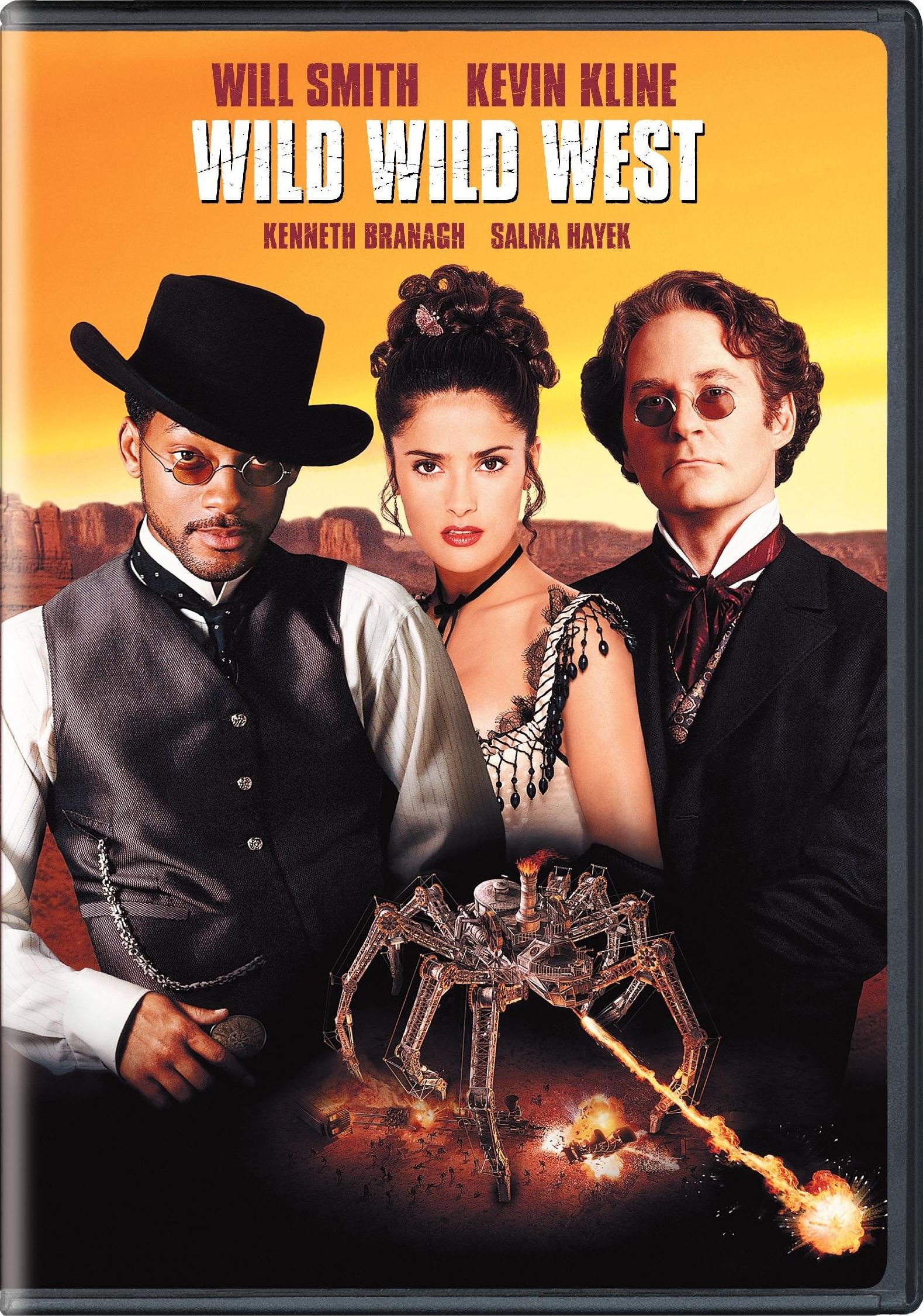
Remember that movie ‘The Wild, Wild West’? I was in that.

Don’t bother looking for my name in the credits. They hired hundreds of us, put us in genuine wool Confederate army uniforms, had makeup people apply facial hair, and then told us to sit in a non-air-conditioned soundstage all day in sweltering Burbank, waiting to be called to the set. 

Fun.

I had been booked for four days. When I got home at the end of the third day I got a phone call. A directing job I'd been hoping to get had come through. 

Of course I came in for the fourth day –– I’d put off starting the directing job because I’d committed to the extra work –– but since the scenes I was supposed to be in hadn’t been finished, the Assistant Director made an announcement to the bunch of us that they’d be needing us to come back for a few more days. 

I took the AD aside and told him that I was sorry, but that I couldn’t make it back. And this guy? He tried everything. He appealed to my greed. (“I’ll see if I can swing you more money.”) He appealed to my sense of duty. (“You committed to this project. You can’t just leave us in the lurch like this.”) He even tried to threaten me. (“With an attitude like that, you’re not going to go very far in this business.”)

Finally, out of ammo, he asked. “What could you possibly be doing that’s more important than helping make this film come together?” 

I didn’t want to do it, but I had to tell him. “I booked a job directing a commercial for American Express.”

“Oh.” 

There are two points to this story and they both aim square at the second most important thing you need to look for in a producer: 

The second most important thing to look for in a line producer is someone who’s committed to seeing your project through.

Point one was that I was not that. Not to Barry Sonnenfeld, anyway, or the rest of the people on ‘The Wild, Wild West’ and maybe that’s why the movie turned out to be such a turd. Point two was that the AD was. He did his very best to get me to come back, but no matter how hard he tried I gave him something he simply couldn’t trump. 

Granted, I wasn’t the producer and neither was he. But here’s the thing. There will always be reasons. People get sick. People’s kids get sick. Relatives die. Those and many more are legitimate reasons to not come into work and if you don’t understand those you shouldn’t be in a position of authority.

It’s the illegitimate reasons that can never ever ever get in the way. Like the producer who disappeared on me because the surf was really good. Or the one who went incommunicado for hours at a time as soon as the bars opened. 

When you hire a producer, make sure you hire one who wants not only to be a producer, but wants to be your producer. As uncool as it is, people will ditch one job for a better one and let’s be honest, your masterpiece might not be the best job a producer is in contention for.

Remember the first most important thing to look for in a producer? Ethics? This is a another reason that’s Thing Number One. An ethical producer will finish out his or her commitment to you and if Spielberg calls, he or she will ask him to wait until this project is finished. 

I don’t know Steven Spielberg, but I’d be willing to bet you he’d respect that. After all, he’s not looking for someone who’s going to disappear in the middle of his production, either. 

As for Barry Sonnenfeld, if you’re reading this? Dude, I’m sorry.

Brian Belefant is a copywriter turned director still finishing up post production on a corporate video that you'll never get to see because of all the non-disclosure agreements and stuff. But hey, if you're looking to put together your next project, maybe he'll be done by the time you pull the trigger. Call (503) 715 2852 or email belefant@me.com.

Tuesday

How to watch your own film

If you think this is Nice, you're close.
It's Cannes.
I was super lucky. I learned this lesson at Cannes, where a public service announcement I’d directed was chosen to screen. Major venue. Sophisticated audience. Sold out theatre. (Did you notice I spelled it with the R before the E? Yeah. All French and everything.)

So anyway, sold out theatre, which meant that by the time I got there I ended up having to stand and I guess the French fire marshall isn’t as particular as the ones we have here because even after all the seats were taken, people kept piling in. And all of them were going to see the tiny thing we managed to pull together for less than $6,000 –– and that included what we spent to fix the scratch on the negative, which by the way wasn’t David Claessen’s fault. He did an amazing job as the cinematographer on this and I have yet to thank him appropriately.

Where was I?

David Claessen –– extraordinary cinematographer
By the time the lights went down, the aisles were full and I’d been shoved all the way to the front of the theatre, almost underneath the screen, which meant I didn’t get a very good view of anything that was being projected. But I got an incredible view of the audience. 

I got to see people engaged, bored, interested, fidgeting…

When my little gem came on, I wanted to see it. I mean, I WAS SCREENING IN CANNES! 

But I couldn’t, really. And besides, it’s not like I hadn’t seen it before. So I watched the people watching it. 

The whole spot happens in one take –– that’s the way I designed it –– and there’s an instant where I want you the viewer to realize what’s going on and just how horrific it is. It’s one thing for a director to intend that; quite another for a director to make it happen. And I made it happen. The entire theatre gasped at exactly the same moment.

(If this video doesn't play,
try this link: https://vimeo.com/75154837)

“Damn,” I thought to myself. “I am very talented."

And this is why I was lucky. It happened early in my career. 

So early in my career that I figured, hey, I’m going to watch people watch my stuff every chance I get because that way I’ll get to see for real just how talented I am. 

What I came to find out pretty quickly was that while everything worked exactly the way I planned for it to in this one piece, other times stuff didn’t go quite the way I thought it would. A joke I thought would get a huge laugh would only get an appreciative nod. Or a narrowing of the eyes. One time I happened to be in a bar when a commercial I’d just finished working on, one that I was super proud of, came on the TV. Nobody even looked up. 

The thing is, I wouldn’t have known about those reactions –– or non-reactions –– if I hadn’t been watching for them. 

And I wouldn’t have been able to fix the problems if I hadn’t seen for myself where they were. 

I’ve been to a lot of Hollywood screenings where the directors sit in the back. When the film is over they nod and smile and graciously accept the praise of the people filing out. People who almost without exception tell them how wonderful they thought it was. 

Sure, if you’re sitting in the back it’s easier to duck out so you can take a call from your agent or Martin Scorcese. But the directors I respect most don’t sit in the back and wait to hear people tell them what they want to hear. They turn off their phones, stand in the front, and see for themselves.

Brian Belefant is a copywriter turned director totally excité for his next assignment. Please call (503) 715 2852 or email belefant@me.com.

Friday

Let's be careful out there.

One of my first projects as a baby director was a spot I offered to finance and shoot for a friend of a friend. It was a pretty ambitious production –– a post-apocalyptic story involving a golfer in a gyrocopter. 

At one point, I wanted to give some notes to the actor, so I walked from where I’d been standing by the camera toward the flying contraption he was sitting in. 

I didn’t notice that the blades were spinning. 

Okay, I did, but I was concentrating on my shots and the stuff I wanted to talk about with the actor. Between the angle of the blades and the speed they were turning, I was about to be decapitated. 

If you think walking into the spinning blades
is scary, imagine flying the damn thing.
Spoiler alert: I didn’t die. I got about ten feet before I was tackled to the ground by my Assistant Director. Among other things, the AD is the person who keeps the set safe. 

I’ve been thinking about this because I’ve been reading a bit about Randall Miller, the director of ‘Midnight Rider’, and how he pleaded guilty to involuntary manslaughter for the death of Sarah Jones, the camera assistant who was killed when a train unexpectedly plowed into the set they’d built on a train track. A lot of what's being written makes it sound as if filmmakers are cynical taskmasters who will put people’s lives at stake in order to get a shot.

I don’t know Randall Miller or any of the other people involved in making that film, but I’m pretty sure they didn’t want Sarah Jones to die. And no, not just because they had more filming to do. 

But here’s what happens. 

'Burning Passion', a pretty ambitious
(and kind of dangerous) short film I directed.
A film is a project. A gloriously fun and exciting project, full of potential and fraught with unexpected complications. 

If you hire well, everybody on the project –– even the people who really only stand to benefit financially, like the guy who drives the motor home and the people who put up the lights –– everybody gets excited about this thing you’re making. We all pull together. 

And so when it comes to making a shot a little better, heck yes we want to do that. 

"Should we shoot the dream sequence on the bridge?" Yes. "There’s a train coming. Can we get one more take?" Yes. If we take the rig down and put it back up, we’ll lose the light or fall behind. 

My brother hates flying. He once explained to me why he was more afraid of take offs than landings. “When you’re landing,” he says, "the pilot wants to be on the ground. So he’s less likely to pull up if something goes sideways.”

It’s the AD’s responsibility to not only be aware of the safety issues, but to make them clear to every single person on the set. We have what's called a Safety Meeting every time we’re doing anything that might put anyone in harm’s way, whether it’s working with a cat that might scratch an actor or a candle on a mantel that might fall over and set fire to the chair. 

Yeah, when you're not shooting real bikers wielding real knives or creating a gag to look like flaming ejaculate (both of which I'm proud to say I've done) the safety meetings can be pretty annoying. We’re excited to make this thing. We don’t want to freak out because we’re filming a five-year-old holding a sparkler, but you know what? Somebody needs to. 

I wanted real bikers. I got real bikers.
That’s why when you hire an AD, yes, you want the person who’s going to be excited to work on your masterpiece and do everything possible to make it better. But if your plane is headed for the ground, you want the pilot who’s going to get it onto the ground, quickly and safely. Even better, you want an AD who does the things that keep the plane from going out of control in the first place.

I suppose I was fortunate to have learned that lesson early on when my AD quite literally saved my life. I hope my writing is dramatic enough to make you think seriously about it.

Brian Belefant is a copywriter turned director currently rooting around for his next assignment. Please call (503) 715 2852 or email belefant@me.com. 

Post Script: I sent a draft of this blog post to Laura Nisbet Peters, one of the finest (and funniest) Assistant Directors I know. She offered the following thought: 

"I’ve been in situations like that. The weirdness of it all is that the guy who hires you, and who may or may not hire you later, is the guy to whom you have to say no. Yes, the AD is the safety rep, but the director and the producers are his/her bosses. Accidents that shouldn’t have happened serve as the ammo you need for when you are alone standing your ground with only your tiny sling shot.”

Are you listening?

Monday

Something to think about.

We live in an age when CEOs are fairly universally reviled, and yet so many of us are mourning –– deeply –– the death of not just a CEO, but a billionaire CEO who had a reputation for ruthless perfectionism and outsourced what? 100% of his company's manufacturing jobs overseas? 

Are we hypocrites? Or is the Steve Jobs Reality Distortion Field so powerful that it transcends even death?


I posted this on my Facebook page and got some thoughtful responses. I'm posting it here because I'd like to hear more. 

Wednesday

More proof I have no clue what I'm talking about.

Not long ago I judged the Student Academy Awards. Which is a pretty prestigious honor, by the way, but not the point here.

One film in particular captivated me. I don't think I'm supposed to reveal which one because the awards haven't been announced.

The thing was, it didn't captivate most of the other judges.

One of the other judges liked it as much as I did, but she had to leave before we were finished, so it was up to me to fight for the film. Which I did. I managed to get it a second shot, to have it screened in front of the entire judging panel at the finals.

Where it went down to defeat.

The films that were selected weren't bad, but frankly, they didn't have something that this one did. They all had heart, story, and craft, but this one also had something extra. It broke ground. The filmmaker understood the potential of the medium and told her story (I think I'm allowed to reveal that she was a her) in a way that could only have been told on film.

Unfortunately, at the finals, I couldn't make that case. All we could do was vote.

So what's my point?

It's not that I don't know what I'm talking about. And it's not that the other judges were idiots. It's that my opinion is just that. My opinion.

This is a tough lesson to learn, especially when you're starting out. But most people you show your work to aren't going to get it. Those that do will never –– and by never I mean really, really rarely –– like it as much as you do.

I wish I could talk to the filmmaker of that film that isn't going to win a Student Academy Award. I'd tell her that she's a prodigy. That her audience, in spite of being a prestigious panel of filmmakers, wasn't sophisticated enough to understand what she accomplished.

And I'd tell her to keep working. Because the only way she'll ever find an audience is to create stuff and put it out there.

Friday

How you buy often indicates how you make

Apizza Scholls –– truly magnificent
pizza in Portland, Oregon


The other day I was talking with a producer buddy of mine about pizza. He buys the cheapest pizza he can find. And he prides himself on using coupons to save even more. 
Another producer I know insists on going to the most expensive pizza place in town. It's good. But I'm not convinced it tastes the best.
As for me, I like pizza. A lot. I lived in New York and developed a taste for wood-oven pizza like what you get at John's. The pizza I like to get is in a place with formica tables, in a part of town surrounded by bars and tattoo parlors. I don't find the area particularly scary, but some people do.
What does this have to do with filmmaking? Well, it's interesting.
The cheap producer makes things the way he buys them. He's always looking for a way to save a buck, and doesn't see the point in spending money on a better camera, the really good dolly grip, or the brand-name cookies for the craft services table.
The profligate producer is what we call a "star fucker." He hires the most famous people he can find and if nobody's more famous than anybody else, he'll go for the person with the highest rate. If there's an expensive piece of equipment out there, he'll not only find it, but figure out why he has to use it.
And then there's me. I'm looking for the unique. The expressive. The solution that helps me to evoke the feeling I want to create. If it's expensive, I'm happy to spend the money. But if it's cheap, I'm even happier.
The interesting thing is that by and large, none of us has enough money –– ever –– to do a job "right." So you would think that the cheap producer would be at a distinct advantage. And sometimes he is.
But the star fucker producer isn't exactly starving. Because he speaks with such conviction about the stuff he thinks has value, he's often hired to pull off a job where a mediocre piece needs something to make it work better.
As for me, I feel fortunate in that my taste is distinctive, but not necessarily expensive. Sure, I need certain equipment to achieve the look I want, but I know enough about every job on the set that I don't need to rely on somebody with some mystery talent I don't understand to deliver it.
Who's going to do the best, ultimately? Who knows?
You might think it's the cheap producer because he's always the least expensive option. But the quality of the stuff he creates tends to be minimal.
You might think it's the guy like me because I'm generally somewhere in the middle, yet the pieces I deliver are consistently distinctive and extremely high quality.
Frankly, I think it's the star fucker. Because most people –– in any profession –– are insecure. They prefer to hire and trust the person with the aura of authority.
I should probably rethink my approach.

Tuesday

The Old Spice guy, part II


Did you realize that the Old Spice guy is African American? 


I did. But only recently. 


This is relevant. First of all, because I'm old. And second because I grew up in the South. So I'm keenly aware of the prejudices I've worked so hard to overcome. Or at least I used to be. The fact is, the man's race wouldn't have even occurred to me except that I overheard someone describing his dark skin the other day –– and not in any disparaging way.


And even though I'm speaking for myself, I think it's pretty clear from the chatter that this campaign has generated that I'm speaking for the vast majority of people who have seen it. There is no uproar. Sure, there's controversy. Anything this popular is bound to have its share of detractors. But when I was coming up, the negative comments would have had more to do with the man's race than the advertising's message.


Ten years ago, a campaign like 'The Man Your Man Could Smell Like' would have been considered audacious had it starred an African American. Twenty-five years ago, casting like that would have been inconceivable. 


Today –– and I know this because I've spoken to some of the people who work at Wieden + Kennedy –– Isaiah Mustafa got the part not because he was black and not in spite of the fact that he was black, but because he was the right person for the role. Period.


I'm not an idiot. I know we still have a lot of racial stuff to work out in this country.


But we've come a long, long way. 


Friday

See? Somebody else thinks I'm pretty swell (not you, Mom).

Brian BelefantIf you're not familiar with pdnonline.com, now would be a great time to check it out.
Why? Well, they're the go-to resource for a ton of really talented photographers I'm honored to be among. But more important, they wrote a nice article about me.
Please check it out. The article. You can get to it via this link.
When you're done reading all about my exploits, take a couple of minutes to peruse the rest of the PDN site. You might find some inspiration. I always do.

Tuesday

When is a boondoggle not a boondoggle?

A lot of people in the advertising business think of a boondoggle the way the Supreme Court thinks of porn –– they can't define it, but they know it when they see it.

I don't think it's that hard to draw the line.

It all comes down to responsibility. If you're doing something you honestly intend to help your client, you're not engaging in boondogglery. If you're doing something for your own personal gratification at the expense of your client, you are.

Take me, for example. I like to travel. So I'm extremely open to finding alternative destinations we can use to produce work for clients. Most of the time, the solutions I find are actually less expensive than the conventional solutions. So if I take a job to Spain and save a client $60,000 over shooting in LA (as I've done), that hardly counts as a boondoggle.

If shooting in Spain costs exactly the same as shooting in LA, money has nothing to do with the decision. If I want to go to Spain and the commercial wouldn't suffer from having been shot there, fine. That doesn't count as a boondoggle, either. As long as the end result is the same.

Where it becomes a judgement call is when shooting in Spain costs more than shooting in LA. And the answer is simple: Do you get more value from shooting there? Not just the "what shows up in the frame" added value, but also the other intangible stuff. Working with a talent pool that isn't overexposed, trying out a new crew, getting to sample the local cuisine. The reality is that for all the positives about shooting elsewhere, there are negatives as well, which I listed pretty extensively in my post on February 26th. I speak Spanish, but I speak English better. So while I can work with a crew in Spain, I'm working harder in order to do so.

On balance, if the benefits outweigh the disadvantages, and I mean mostly to the client because that's who your responsibility is to, then it's not a boondoggle. But if it's a way to make a client pay for a bonus you want to give an employee who's done a really good job this year, it is.

The bottom line is that work is work and vacation is vacation. You can love your work. In fact, you should love your work. But it's still work.

Monday

Hope and the magic lottery.

As much as I want you to read my blog, there's someone else's you might consider reading.


Occasionally. 

It's Seth Godin, who is not only a lot more famous than I am, but a lot more prolific with his blogs.

He generally writes about marketing and technology, not filmmaking, but once in a while he posts something that is absolutely, perfectly relevant to you, Aspiring Filmmaker. Like this gem.

Read it, enjoy it, then come back.

Tuesday

I don't get it.

My three-year-old daughter has been extraordinarily good lately, so my wife and I told her she could choose a treat. She dedided she wanted to see a movie in a theater. She wanted to see 'The Green Man' ('Shrek 3').


I was hesitant. After all, isn't Shrek a little mature for a three-year-old?


The movie's rated PG, which didn't assuage my reluctance, but on the way to the theater, we passed by a McDonald's, where all the Happy Meals feature the lovable green ogre.


Well, there it is. Happy Meals are made for kids. I know that because I used to shoot tons of Happy Meals commercials. So what if they're increasingly marketing tie-ins with movies? My feeling was that having their imprimatur conferred legitimacy on the film as something genuinely for kids.


The film itself was pretty benign. My daughter got a little scared toward the end, but she didn't cry or scream or even avert her gaze, so I guess we did okay. But one thing about the film struck me as odd. 


The soundtrack.


The music –– almost all of it –– was from the 1970s. One of the songs was 'Top of the World'. The original version. The one sung by Karen Carpenter.


'Top of the World' was a Billboard #1 hit in 1973, which means if you remember that song at all, you're not just way too old to be eating Happy Meals, but your children are probably too old to be eating Happy Meals. 1973 was 37 years ago. The fact that I remember the song is anomalous. I was young when it came out, and super old when I started having kids. 


If you were 17 in 1973, you're 54 now. If Happy Meals are meant for kids 12 and under, you gave birth when you were between 42 and 54. So what gives?

The way I see it, there are four possible explanations.

1) 'Shrek 3' is meant to have a dual appeal, to kids and their parents, specifically older parents.
2) 'Shrek 3' is meant to have a dual appeal, to kids and their parents, and nobody bothered to figure out that most kids don't have parents that are more than 42 years older than they are.
3)  'Shrek 3' is designed to occupy a really narrow niche –– appealing to grandparents who take their grandkids to the movies.
4) Everybody making the critical creative decisions on 'Shrek 3' is an old guy –– between 54 and 70. And is completely oblivious to the fact that their musical tastes are antiquated.

I'm going to go with #4. But only because I know that it's possible. I've seen Hollywood egos up close and for every executive who tries to manufacture a product to appeal to a demographic, there's another executive who doesn't give a crap about demographics and does what he knows is best. 

When Mr. Demographic has the power, you end up with a rap song being played over the end credits of a film in which it would be otherwise utterly inappropriate in order to broaden the appeal of the soundtrack and presumably, the film. When Mr. Ego has the power, you end up with 37-year-old songs being used in films that are targeted at people who have little frame of reference to appreciate them.

But I could be wrong. There could be another explanation. 


Anybody got one?

Thursday

Directing... cooking... the same rules apply.

I've spent a disproportionate amount of the past eight months shooting out of town, and living in hotels, I've had a disproportionate number of meals in restaurants. Some of them quite frou frou.

And you know what? I've learned something.

The fancier restaurants used lovely ingredients and prepared them well, but most of them did something that pretty much spoiled every dish. They tried too hard.

Usually that meant they added just one ingredient too many. The smoked salmon appetizer had both goat cheese and chutney. The sushi-grade hamachi was seared, then slathered in teriyaki sauce.

I know what you're thinking. You're thinking, "Brian, what does a restaurant meal have to do with film making?" Well, I'll tell you.

Strangely, a lot.

Directing, like cooking, is about honesty. And when you get too tricky with either, what you gain in style you lose in directness.

Obviously, I'm not advocating bringing out a slab of meat (actor) on an unadorned plate (set), and leaving it up to the restaurant patron (viewer) to appreciate it in all its raw glory. What I am advocating is finding the best ingredients possible and combining them in ways that they work with each other –– ways that they emphasize each other's strengths without masking what makes each of them unique.

Take that a step further. You need a good recipe (script) and the equipment to prepare the meal (crew, equipment). And when all is said and done, the presentation should look appetizing (mise en scene, lighting) without creating expectations counter to what the meal can deliver. And each course (act) needs to work with the others, so that there's a satisfying flow from the appetizers (opening credits) to the dessert (denoument).


Or, to put it another way, if you have Meryl Streep performing Shakespeare, you probably don't need to shoot it underwater.

Wednesday

Sometimes, you have to travel 4,000 miles to get the best dirt from your back yard.

If you're in the film business in Nova Scotia, you either are now or will be soon drinking at the Economy Shoe Shop in Halifax. As I was. Repeatedly. A couple of days last week.


I ran into a bunch of film people I've either worked with, heard of, or vaguely know, and was told more or less the same story by five of them:


Apparently, a huge American client (name withheld) was convinced by its huge American ad agency (name withheld) to pony up for what's technically known as a boondoggle –– wasting a bunch of a client's money in order to indulge your own personal desire. In this case, a business class ticket and five-star accommodations in exotic locations around the world, hobnobbing with famous people, in order to "supervise" a production.


You noticed the quotes, right? I'll get to those in a minute.


One stop on this whirlwind world tour was Lunenburg, Nova Scotia, where an Academy Award-nominated movie star (name withheld) was to be filmed entering a class room. Thirty or so local kids were hired as extras for the shot, for which they were meant to be paid $200.


The director decided to tell the kids what to do when said movie star walked into the room. This is called "directing" and union rules are pretty clear that directors can't do that. If directors direct extras, those extras become principals, which means they get paid as principals. But I suppose the production team figured that since these kids were just local Nova Scotia yokels, not seasoned Hollywood actor kids, who would know, right?


(For the record, the movie star appearing in the commercial is a Nova Scotia yokel herself, which was probably one of the arguments the agency mounted to convince the client they needed to take an all-expenses paid trip there, but isn't it funny how the dots aren't connected when it's not convenient to do so?)


Where was I? Oh yeah. Union rules.


These union rules, by the way, are not obscure or particularly arcane. They're almost as basic as "light goes into the front part of the camera." You can't be a working producer or director –– much less a producer or director worthy of flying around the world, spending hundreds of thousands of your client's dollars, and working with an Academy Award-nominated actor –– without knowing them.


Still, nobody "supervising" the production flagged the take as unusable, so the editor cut it into the spot. Which got presented all the way up the corporate ladder and approved and eventually ran globally.


Union rules are pretty clear about this, too. Each time a principal appears in a spot on air, he or she is entitled to collect residuals. But I suppose Nova Scotia is considered such a backwater of civilization by the sophisticated ad guys in LA that they figured nobody there has television.


Imagine their surprise when somebody noticed.


A fan got hit with shit, as they say, and negotiations were suddenly entered into in earnest. The upshot? Each of the extras got a nice little surprise bonus –– a check for $10,000, courtesy of the client. I don't know the media schedule, but I'd be willing to bet that the union was extremely generous in the compromise it reached on behalf of the performers.


Which brings me to the quotes.


Here you have a copywriter, art director, producer, account executive, and probably a couple associate creative directors, account directors, creative directors, and agency heads of production –– because this is, after all, a critical project for this very important client and somebody must be on hand in each of these exotic locations that coincidentally we've always wanted to visit at someone else's expense –– "supervising" this shoot and yet not a single one of them did anything to prevent a $300,000 overage.


The bottom line: Lots of people got really nice vacations, the director (if he's not totally inept) shot enough footage even if the concepts were totally lame to cobble something impressive together to go on his reel, and 30 kids in Nova Scotia are well on their way to having college paid for. The client ought to be furious because the agency didn't just drop the ball, they ran into their own end zone and then stomped on it, but they're so huge and profitable that $300,000 is probably less than their catering bill at the annual shareholders' meeting, so maybe they don't really care.


I think we can take away two lessons here:


1) Just because you convinced somebody to fork over a shit load of money doesn't mean you still don't have to do your job; and


2) Those dumb hicks you're hiring for pennies on the dollar aren't necessarily dumb hicks.


What's cool, though? It sure is easy to find people willing to work as extras in Nova Scotia these days.

Monday

Want to know how it feels to be me? Well, here's your chance, sort of.

Tonight at 6:00, the next round of judging for the 37th Student Academy Awards will be held at the Whitsell Auditorium in Portland and the public is invited. And while you won't actually get to choose which films go on to the final smackdown in LA, you can sit there in the dark with a pen and notebook –– just like me –– and make notes about the films you're watching.

Okay, that's not the reason to do it. The reason to do it is because these films are good.

If you're an aspiring filmmaker, you need to see the level of work you better be doing if you seriously want to be taken seriously. And if you're an established filmmaker, you might want to see who's going to be taking work from you.

This is the Regional Finals judging, meaning we've narrowed the field down to no more than six entries in each category –– Narrative, Animation, Alternative, and Documentary.

Admission is free. Can't beat that.

My report from the Student Academy Awards judging.


I just spent two days judging the Student Academy Awards.

Back when I was in film school, there were student films and there were real films. You could tell the student films because they had lousy sound, inconsistent lighting, terrible acting, and stories involving the trials and tribulations of student life.

You were supposed to see past all that to the undiscovered genius, the raw talent that, in the real world, might have what it takes to create something that was both important and watchable.

Judging by those standards, you'd be hard pressed to tell that the films I watched were made by students.

These were stories about poets and day laborers and security guards and ex-wives, told with confidence, skill, and individual style. They were, almost without exception, productions. Real, legitimate productions.

I'm not talking about the amount of money thrown at them, even though there were several with crane shots and steadicams and one even had helicopter shots of Los Angeles. (One film even had an Academy Award-nominated actor in the lead.) I'm talking about work of professional calibre across the board.

What's important here is that student films are no longer competing as student films. They're competing as films.

That's not to say they were all good. Some were extraordinary. Some were lousy. Just like in Hollywood.

I once met Brett Ratner at some Hollywood function. At the time I was quite proud because I'd written six screenplays that were tearing up the screenwriting competitions. I got something like 32 awards for them.

He was unimpressed. He gave me a bit of advice that I found –– and still find –– incredibly profound. He said (and I'm paraphrasing), "The only contest that matters is real life."

I never entered another screenwriting competition after that, which might have been an overreaction, but the lesson I took away was that you can't qualify your success. You can't just write a screenplay that's good in the context of screenwriting competitions. And you can't just make a film that's good film for a student film. Your work is either good or it's not.

If the people who made these films are smart and ambitious –– and I bet most of them are –– the films I judged in the Student Academy Awards will also play at film festivals. Right up there next to films by established, working directors. Like me.

They'll be holding their own. Even blowing my work away.

That's a good thing. A great thing.

The success of these films isn't qualified. And I'm looking over my shoulder.

Tuesday

What's a director's vision and how can I get one? (Part 1.a subparagraph ii)


I want to make another point about that stuff I said back on March 12th about how humankind deals with the discovery of extraterrestrial life. Steven Spielberg, James Cameron, Neil Blomkamp, and Barry Sonnenfeld were all drawn, for one reason or another, to the same material. Just in time for their movies to come out when the public wanted to see them.

Think about it.

What that means is that these directors all happened to be on board with the story two to three years before the audiences were ready for them. They had to be. It takes years to make a movie, from the time it's written through its development, shooting, post-production, marketing, and release.

The genius of Spielberg, I'm convinced, is that he wants to make what people are going to want to see two or three years before they even have a clue that they want to see it. And it's not just Spielberg, although he's probably the most consistent.

Remember 'First Monday in October'? That came out just after Sandra Day O'Connor became the first woman justice on the Supreme Court. Want a freakier one? How about 'The China Syndrome'? Twelve days after that film was released, Three Mile Island melted down. The producers couldn't have asked for better PR for the movie. Suddenly, everybody needed to see it.

By the way, I don't think Spielberg –– or any successful filmmaker –– knows how he knows. He's kind of like Wayne Gretzky, who could only explain why he was so good by saying, "I just skate to where the puck is going to be." Something just gets under his skin. It has to. How else could you work that hard on something for two, three, sometimes four years?

Here's the bottom line on material: You can't know. You can't know what's going to resonate with the fickle public any more than you can project what the Dow Jones Industrial Average is going to be on May 13, 2012. So don't try.

Find the material that speaks to you. If you're lucky, it'll speak to an audience as well. If you're not, at least you won't have spent years of your life pretending to care.

Thursday

What really matters, anyway?

Back when I was an advertising copywriter, I had the good fortune to work for an ad agency in a building designed by Frank Gehry.

When we first moved in, I hated the place. Didn't like the aesthetic. Couldn't understand how this Gehry guy could be so famous and have such abysmal taste in materials and colors.

But after a couple of months, I realized that I was more productive there than I'd been at any job I'd had. The place worked. It went beyond what an office is generally meant to do and created an energy that affected all of the employees. Or me, anyway.

When I left the job, I didn't like the aesthetic or the colors any better, but I had respect for what the architect had been able to accomplish. The agency soon moved into another building –– also designed by Gehry. The new building was much prettier, but it didn't work as well. When books are written about Frank Gehry's illustrious career, the second building gets a lot more ink than the first.

What's my point? My point is that stuff works on a lot of levels. And each person's estimation of the greatness of someone's work is a function of the areas that are relevant to the person. I was able to disregard the aesthetic of the Frank Gehry building I worked in because the energy was so wonderful. (And just so you know, I think a lot of Gehry's work is visually stunning. The one building I worked in just happened to be butt-ugly.)

The lesson? Two lessons. As a consumer, know what you're evaluating and disregard the stuff that's not important. if you go to restaurants to feel pampered, don't make a reservation at the place where you have to sit on a wooden bench and put up with surly waiters, even if the food is supposed to be amazing. If you like watching films with incredible character development, don't expect to be satisfied by a Quentin Tarantino movie.

And as a creator, understand that there are a lot of different areas on which you're going to be evaluated. And don't get pissed off when someone tears you apart for not nailing something you weren't aiming at. If you really really really care about special effects, so what if someone thinks your performances suck?

Sure, it would be nice if you could nail every area, 100%. But then you'd have nothing left to do but die.

Saturday

Looks like somebody did their job.

Last night, I saw a trailer for a film. It takes place in Paris, the story of a guy who observes the environment around him.

Three quarters of the way through the trailer, I turned to my wife and said, "You know what's funny? They could have placed that same story in New York, but it would be a totally different movie."

My wife gave me one of those looks. The one that says, "You're still not over that flu, are you?"

But the point I was trying to make, without even realizing what I was saying, was that the trailer had made it look as if Paris wasn't just relevant to the film, but crucial. It had elevated Paris' status (and I'm only going by the trailer here) from mere setting to almost one of the characters.

Just as I turned back to the screen, the name of the film came up:

'Paris'.

Way to go, Cédric Klapisch. I hope the film is as good as the trailer makes it look.